
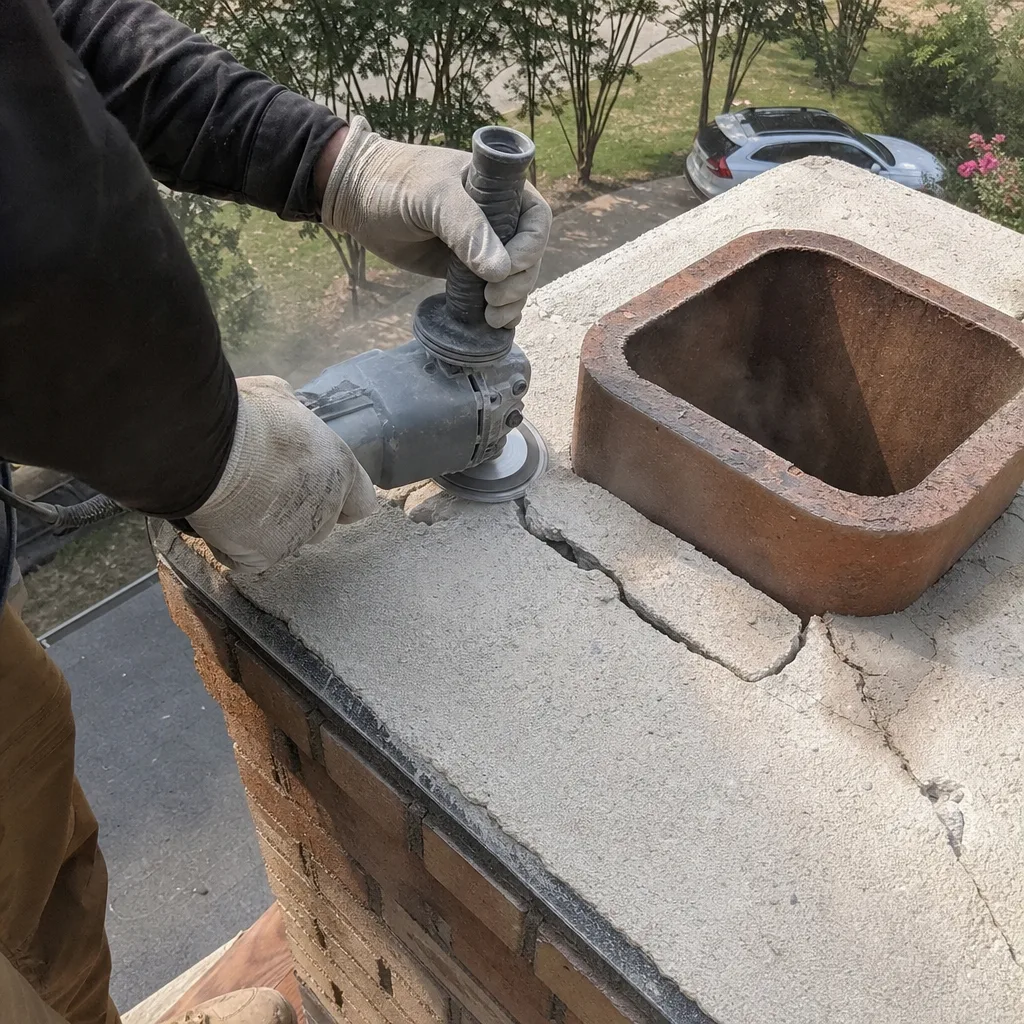
Last updated November 16, 2026
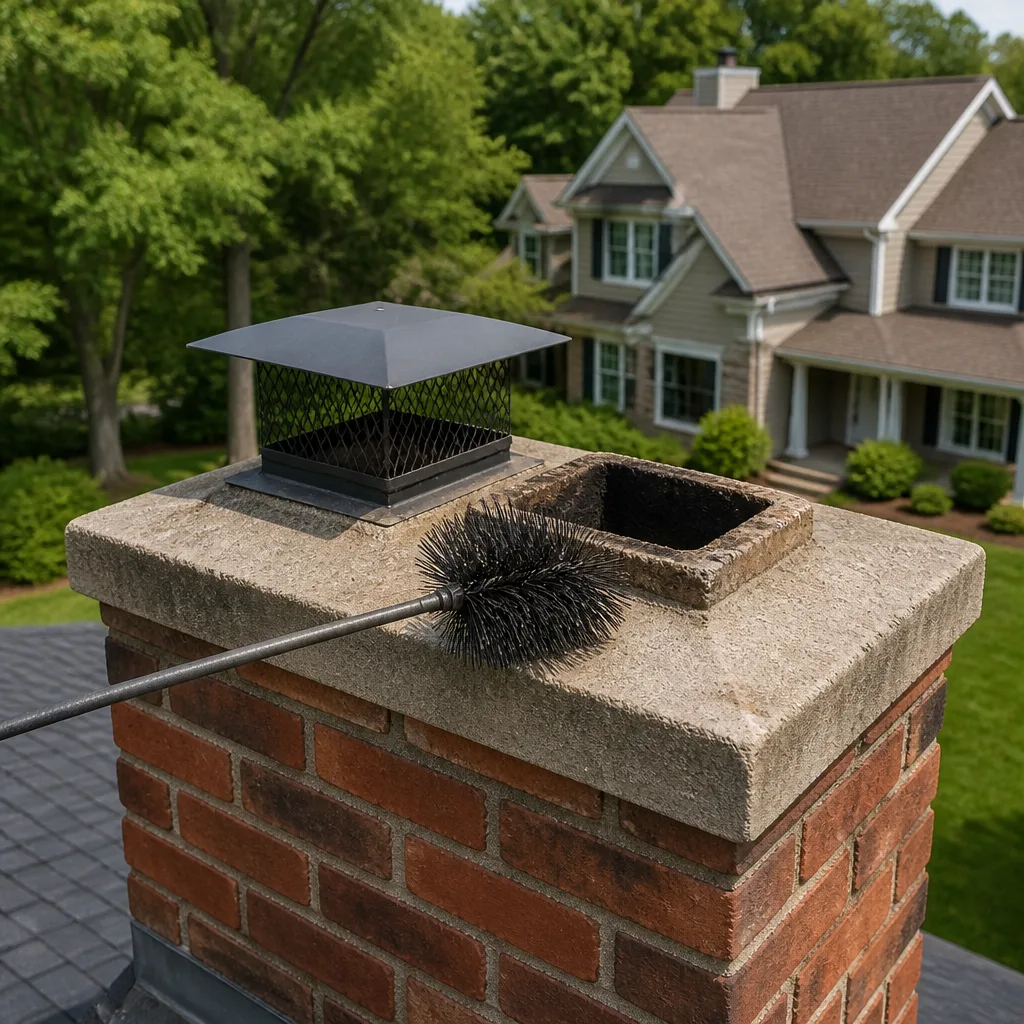 Sweep & inspection
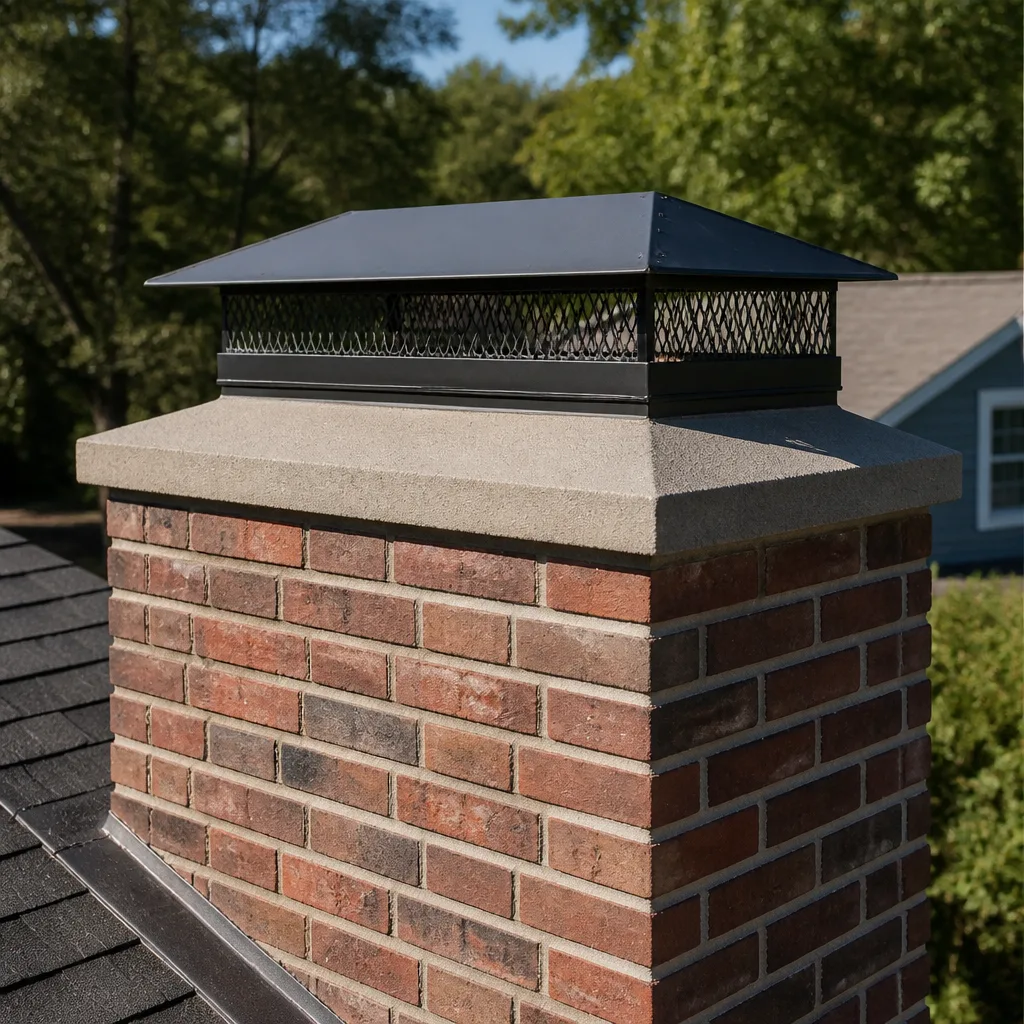 Caps & crowns
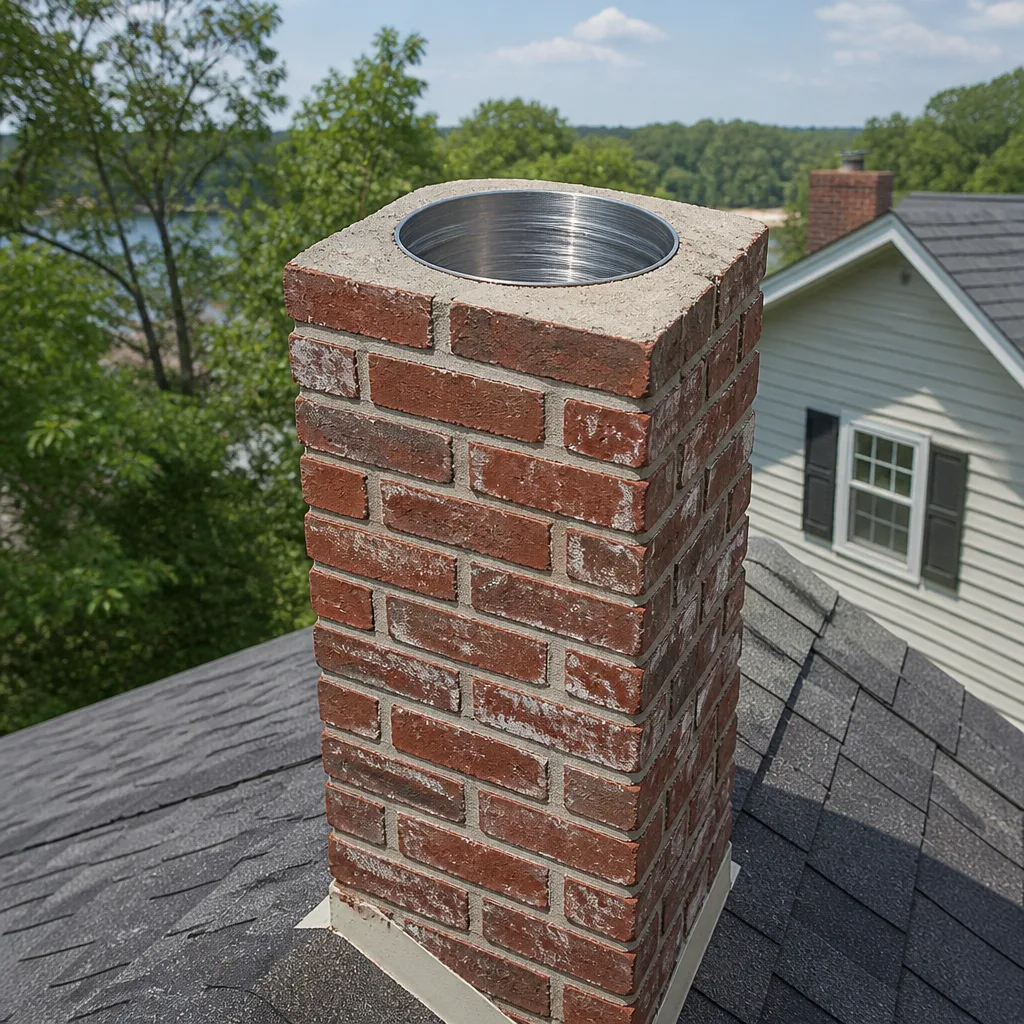 Flue relining
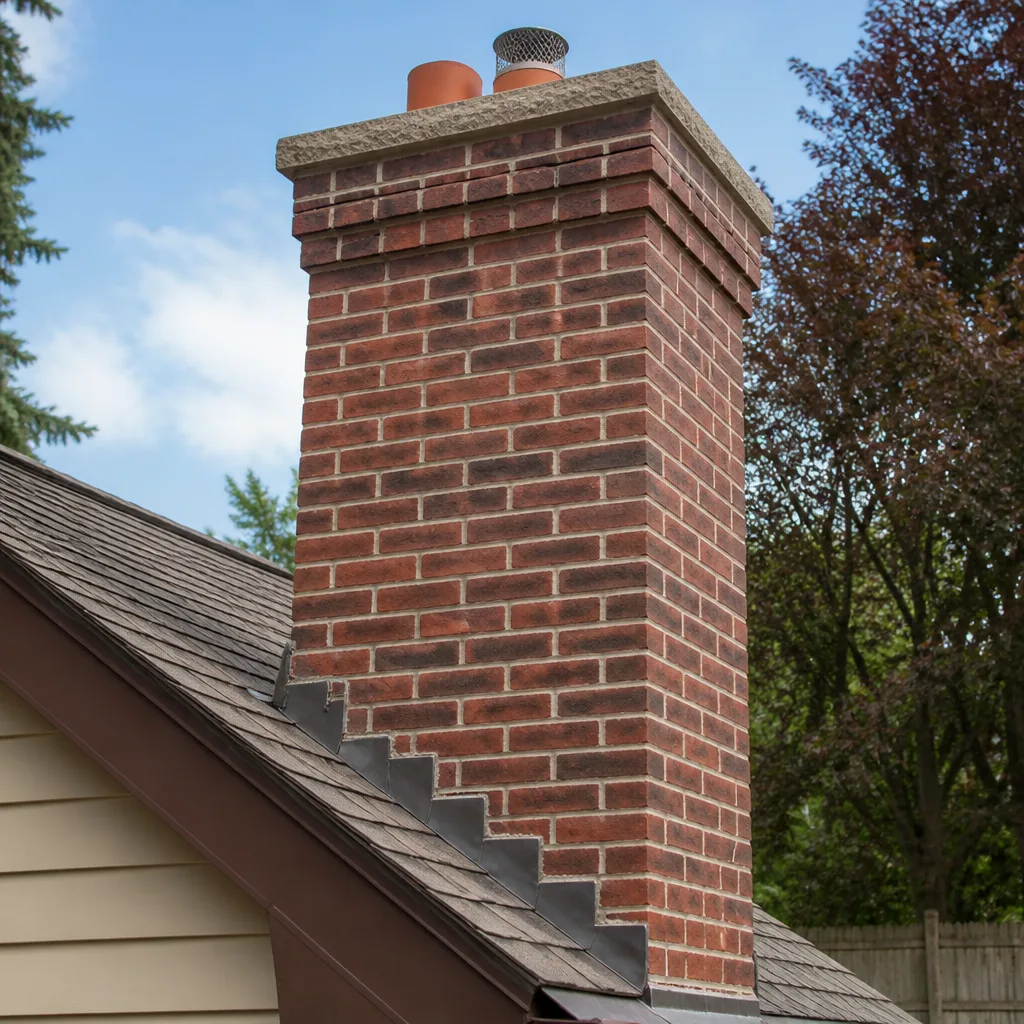 Masonry repair
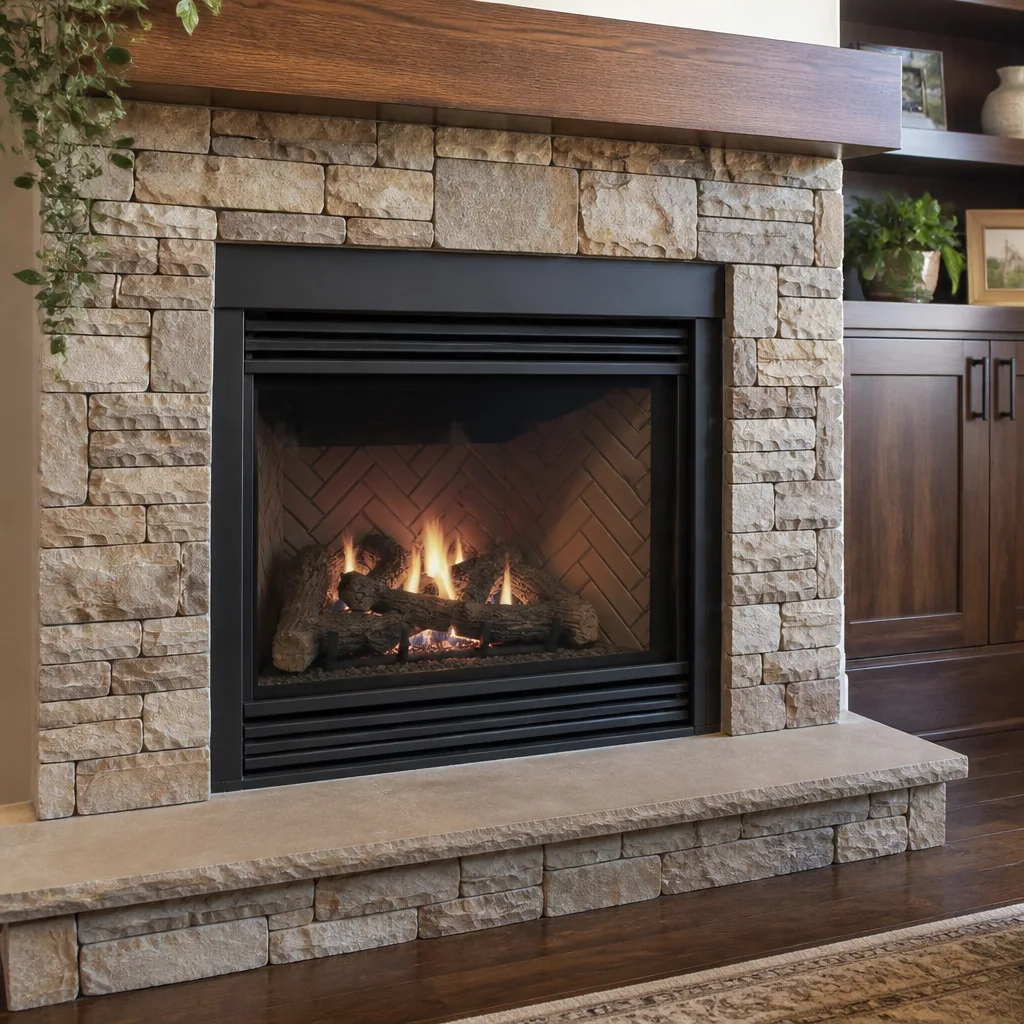 Gas fireplace service
Level 1 sweep and inspection to the NFPA 211 annual standard - flue, crown, cap, and flashing checked and photographed
Chimney sweep logs do not sweep chimneys. They loosen some creosote - which then falls where a brush and vacuum still have to collect it.
Chimney Cleaning Warning Signs: A Cary Homeowner’s Reference Guide
A faint smoke smell in a room where no fire is burning usually gets blamed on the weather. A downdraft, a change in air pressure, a house that’s just a little tight. In our experience running cameras through flues around Cary, that smell is more often a gap in the liner or a seam that has opened up somewhere above the smoke shelf. It doesn’t announce itself. You find it when the camera reaches the spot, and you can see daylight where there should be steel or clay. The dramatic warning signs get all the attention. The subtle ones are the ones that actually show up on our inspection reports. This guide covers what to look for, how to read what you’re seeing, and when a small observation is worth a call.
Quick Answer
Chimney cleaning warning signs in a Cary home fall into three groups: smells (creosote, wet masonry, or exhaust backdraft), visible exterior evidence (crumbly mortar, white staining on brick, a cap that’s shifted), and performance changes (smoke rolling into the room, a damper that won’t seat, a fire that burns poorly). Any one of these is a reason to have the flue inspected rather than swept blind. The sign that matters most is a smell of smoke when the fireplace isn’t in use – that points to a liner or draft problem, not just a cleaning issue.
Styles & brands we work with
- Sweep & inspection
- Caps & crowns
- Flue relining
- Masonry repair
- Gas fireplace service
Table of Contents
- What three different chimney smells tell you
- Ground-level visual signs you can spot without binoculars
- Why white staining on brick is a moisture signal
- The five-minute damper test
- Warning signs specific to gas inserts and prefab flues
- Reading creosote: what a sweep actually removes
- How often a Cary chimney needs attention
- Common mistakes to avoid
What three different chimney smells tell you
Smell is the most useful diagnostic tool a homeowner has, and the most misunderstood. Three distinct odors point to three different repair categories, and treating them as one thing is how small problems turn into structural ones.
- Creosote smell – a sharp, tar-like or campfire odor, strongest on warm days or when the fireplace is dormant. This is a cleaning issue. Creosote has built up in the flue and needs to come out before the next burn season.
- Wet masonry smell – a damp, musty, earthy odor, often after rain. This is a water intrusion issue. It points to a failing cap, cracked crown, or unsealed flashing allowing moisture into the masonry. Left alone, wet brick and mortar freeze and spall through Cary winters.
- Exhaust backdraft smell – a smoky, acrid odor that shows up even when no fire has been lit, sometimes worse in the evening. This is a draft or liner problem. A gap in the flue, a disconnected appliance connector, or a liner that has failed at a joint can let combustion gases migrate into the living space instead of up and out.
The third category is the one worth acting on quickly. A smoke smell when the fireplace isn’t in use is not a draft quirk. It usually means the flue isn’t sealed the way it should be, and a camera inspection is how you confirm it. We document what we find with photos, so you can see the liner condition yourself rather than taking a verbal description on faith. For a fuller look at what an inspection covers, see our page on chimney sweep services in Cary.
Ground-level visual signs you can spot without binoculars
You don’t need to climb a ladder or own a pair of binoculars to catch the early warning signs on a masonry chimney. Stand back from the house and look at the chimney from a safe distance at ground level. The patterns tell you more than any single crack.
- Mortar joints that are recessed deeper than the brick faces around them. Joints should be roughly flush or slightly recessed. When the mortar has washed out significantly, water is getting in and freeze-thaw cycles are doing damage.
- Crumbling or sandy texture at the joints. If you can rub mortar off with a fingernail or see it flaking onto the roof below, it has degraded past surface level. Surface repointing won’t fix it; the joint needs to be cut back and rebuilt.
- Brick faces that look pitted or flaking. Spalling brick is a sign that moisture has been cycling in and out of the masonry for a while.
- A crown that looks cracked or separated from the flue tile. The crown is the concrete slab at the top that sheds water away from the flue. Any visible crack means water is entering.
- A cap that’s tilted, missing, or has a damaged screen. A missing cap allows rain, snow, and animals in. A rusted screen lets embers out onto the roof.
- Dark staining on the exterior brick near the top. This can indicate smoke escaping from a failing flue tile or a poorly drafting system.
Cary gets hot, humid summers and occasional ice in winter. That combination is hard on masonry. Brick absorbs moisture during summer rain, and freeze events in January and February push that moisture into expansion. Every freeze-thaw cycle widens an existing crack slightly. What starts as a hairline at the crown can work its way down. The ground-level check is a two-minute habit worth doing each fall before the first fire.
Why white staining on brick is a moisture signal
Efflorescence is that powdery white staining you sometimes see on brick, usually about halfway up the chimney or near the base. It is salt that has been drawn out of the masonry by water and deposited on the surface as the moisture evaporates. It’s easy to mistake for a cosmetic issue, or to try cleaning off with a wire brush. Neither response helps.
If you see efflorescence, the masonry has taken on more water than it can shed. That water is coming from somewhere: a failing crown, a missing cap, cracked flashing, or a liner that has degraded enough to let condensation form against the inside of the flue tile. What the staining predicts depends on how long it’s been happening. Fresh white bloom that appears after a wet season and then fades tells you the masonry is getting wet but still has dry cycles. Persistent, thick bloom on brick that looks darker than the surrounding masonry tells you the brick itself is saturated.
Saturated brick is where liner condition comes into play. A clay flue tile surrounded by wet masonry is more vulnerable to cracking during freeze-thaw. If the liner has cracks, gases and moisture can cross the barrier. That’s the point at which patching the brick from the outside isn’t enough, and a full liner assessment becomes the priority. It’s also the point where homeowners start worrying about whether a big repair is really needed. Nothing gets recommended here without camera evidence you can see. If the liner tests clean, the fix belongs outside at the crown and the flashing, and we’ll say so.
The five-minute damper test
The damper is the metal plate at the top of the firebox that opens and closes the flue. Most homeowners think of it as a simple open/closed lever. In practice, a damper that doesn’t seat properly is a common cause of poor draft, smoke roll into the room, and a persistent smoky smell when no fire is burning. You can tell a lot about your damper in five minutes, without tools.
- Reach up into the firebox (cold stove, no fire) and find the damper plate. It’s usually a metal flap or a hinged plate.
- Move it through its full travel. Open it fully, then close it. It should move smoothly without feeling like it’s binding or catching on something.
- Close it and look up past it. With the damper closed, look for any gap around the edges. Daylight or a view of the flue above means the plate isn’t seating.
- With the damper open, look up into the flue and shine a light up. You’re checking for obvious buildup, a bird nest, or a broken tile. Don’t reach further than your arm starts to bend – this is a visual check, not a sweep.
- Rotate the damper and listen. A rattle or a grinding feel suggests a worn hinge or a broken pin. Both are fixable without replacing the damper frame in most cases.
- Note what you find. If it seats well and the flue looks clean, good. If it doesn’t seal or you see masonry debris, that’s the call to make.
A damper that doesn’t seat is not just a draft problem. It’s an open door to the living space for cold air in winter, and for backdrafting gases when a kitchen vent or a dryer is running. That’s a common source of that faint smoke smell we opened with. When a damper frame has warped or rusted out, that’s repair work, and our page on chimney repair covers what’s involved in getting it back to a proper seal.
Warning signs specific to gas inserts and prefab flues
Most generic chimney warning sign guides are written for masonry fireplaces. If your Cary home has a gas fireplace insert, a prefab metal-flue system, or a vented gas stove, the signs to watch for are different. Prefab and metal-flue systems are engineered assemblies with specific clearances and, in many cases, specific liner requirements. They’re also the system type most often involved when homeowners report a problem that doesn’t match a masonry symptom.
- Condensation on the glass or the firebox interior. A little on a cold morning is normal. Persistent moisture that leaves water marks inside the firebox points to a flue that isn’t venting correctly, or a liner that has degraded enough to let combustion byproducts collect inside instead of going out.
- Lazy, yellow-tipped flames where the flame was once mostly blue. That’s a combustion issue. It doesn’t always mean the chimney is the cause, but it’s a reason to have both the appliance and the flue checked.
- A metallic smell when the fireplace runs. A metal flue will have a slight warm-metal smell on first use of the season. A sharp or corrosive smell after the unit has been running for a while is a signal to stop using it and get it inspected.
- Visible rust or corrosion on the flue sections at the top. Prefab flues are made of metal. Rust weakens the joints and the seal. This is what a Gelco or Olympia Chimney cap and a proper fitting screen protect against.
- Visible gaps between flue sections. Prefab metal flues are joined in sections. A joint that has opened up is a leak point, and it’s a direct path for exhaust into the framing space.
Gas appliance conversions and insert installations are also the moment when a code-compliant liner matters most. Flexible liners like DuraFlex are used to reline a masonry flue so a gas appliance or an insert can vent properly without depending on the original clay tile. If you’re having an insert installed, or you’re converting to gas, the flue is the part of the job most often rushed. It’s the part that determines whether the system works and vents correctly. Our page on Chimney Sweep Cary is a starting point for how inspections and relining are handled in the area.
Reading creosote: what a sweep actually removes
Creosote is the tar-like residue left behind by wood smoke. It builds up on the inside of the flue over time. It comes in grades, and the grade matters for both cleaning and repair:
- Light soot and dust – a thin film that breaks up with a standard brush. Routine sweep territory.
- Flaky, crusty deposits – the next stage. Resists a standard brush and needs more mechanical action.
- Hard, glazed creosote – a dense, shiny layer that has bonded to the flue surface. A brush alone won’t remove it. It’s also the grade most associated with chimney fires, because it concentrates and holds heat.
On a masonry flue, the swipe of a brush is a reasonable starting point, but the swipe is not the whole job. A thorough sweep removes creosote and soot from the flue and the smoke chamber, and it includes a check of the firebox and the first few feet of the flue. A blind sweep tells you nothing about the inside of the chimney above the damper. A sweep should be paired with a camera check of the flue. That’s how we work: the cleaning is the surface, the camera is the evidence. You should leave with photos of what the flue looks like, not just a receipt for a sweep.
In a home with a tight, well-insulated chase, creosote buildup can be faster than the general rule of thumb suggests. Cary homes tend to be tight and well-sealed, and that means less natural draft assistance from air leakage. A slow-burning fire with damp wood produces more creosote than a hot fire with dry wood. The wood you burn matters more than most homeowners realize.
How often a Cary chimney needs attention
The general rule is that a chimney should be inspected once a year, and swept whenever there’s a measurable buildup of creosote. For a household that burns wood regularly through the season, that usually means a sweep once a year, ideally before the first fire of the season in late fall. For a household that burns occasionally, the annual inspection still applies, because the inspection is what catches the signs you don’t see from the ground.
There are reasons a Cary chimney might need attention more often than that:
- Burning unseasoned wood. Wet wood produces more smoke and more creosote.
- A flue that’s oversized for the appliance. A slow, cool exhaust draft leaves more residue behind.
- A history of water intrusion. Wet masonry changes how the flue behaves. If you’ve seen efflorescence or a wet smell, that flue needs a check before you burn.
- A recent appliance change. Converting to gas, installing an insert, or switching to a wood stove all change what the flue needs to handle.
- Buying or selling a home. A pre-sale or pre-purchase chimney inspection is its own category. The buyer wants to know what they’re inheriting, and the seller wants documented proof of condition.
Year-round timing is a practical consideration. The slow season for chimney work is spring and summer. Getting an inspection on the calendar in late spring costs you nothing in terms of safety, and it means you’re not waiting when everyone else realizes it’s October. The urgency here is seasonal, not hourly. There’s no reason to rush a sweep in July, and there’s every reason to have it done before the first cold snap.
Common Mistakes to Avoid
- Burning unseasoned wood because it’s what’s available. Wet wood smokes more and leaves more creosote. If the wood hisses or feels heavy, it’s not ready. Cary has plenty of firewood sellers, and asking about moisture content before you buy is standard.
- Treating white staining on brick as a cleaning problem. Efflorescence isn’t surface dirt. Brushing it off doesn’t fix the moisture source behind it, and it will come back. The fix is at the cap, crown, or flashing.
- Skipping the camera inspection because the sweep “looked clean.” A brush can clear the flue and miss a cracked tile or an open joint entirely. The inside of the flue is not visible from the firebox.
- Assuming a smoke smell is a draft problem and opening a window. A faint smoke smell when no fire is burning deserves an inspection, not a workaround. It often points to a liner gap.
- Hiring the lowest bid from a general handyman. Chimney work is its own trade. Masonry repairs at the crown, liner installation, and damper work are all specific skills. Generalist services treat the chimney as a side item, and there are details – proper liner material, correct clearance, correct flashing – that get missed when the crew is spread across a dozen home services.
- Putting off the pre-season check because the fireplace “worked fine last year.” It probably did. The check is about this year, and about what changed in the twelve months since. A small cracking at the crown or a joint that’s opened up doesn’t show up in how the fire burns until it’s significant.
- Ignoring a damper that doesn’t seat. A damper that won’t close fully lets cold air and backdrafted exhaust into the living space all winter. It’s a small repair that gets bigger when the hinge seizes completely.
See the difference
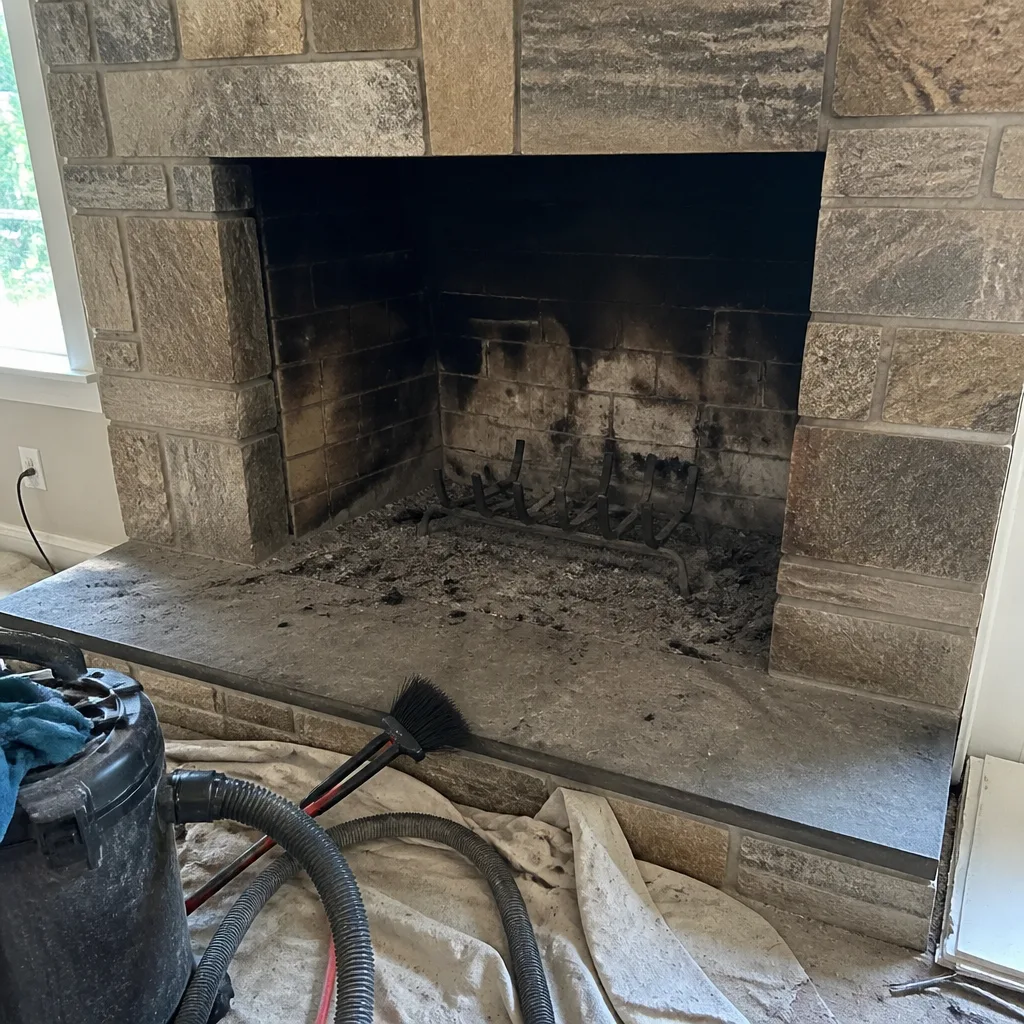 Before
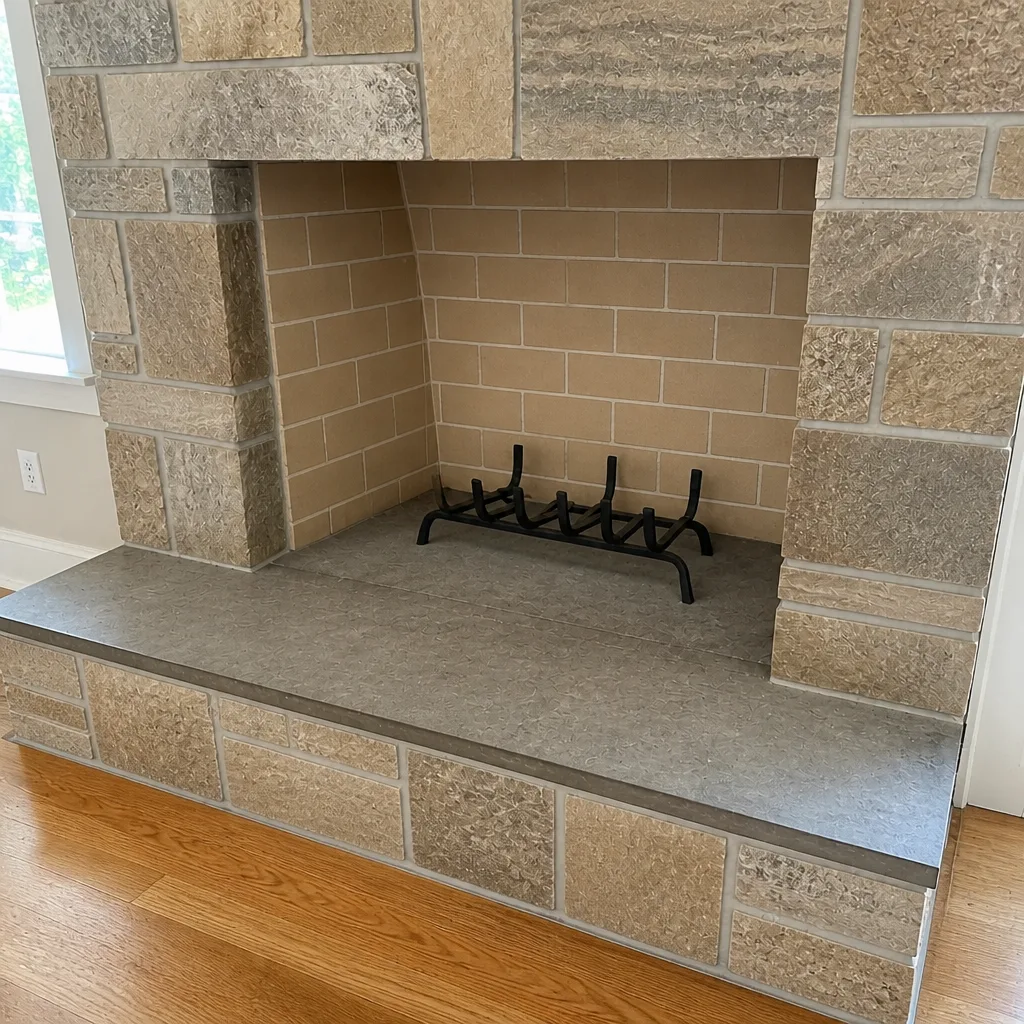 After
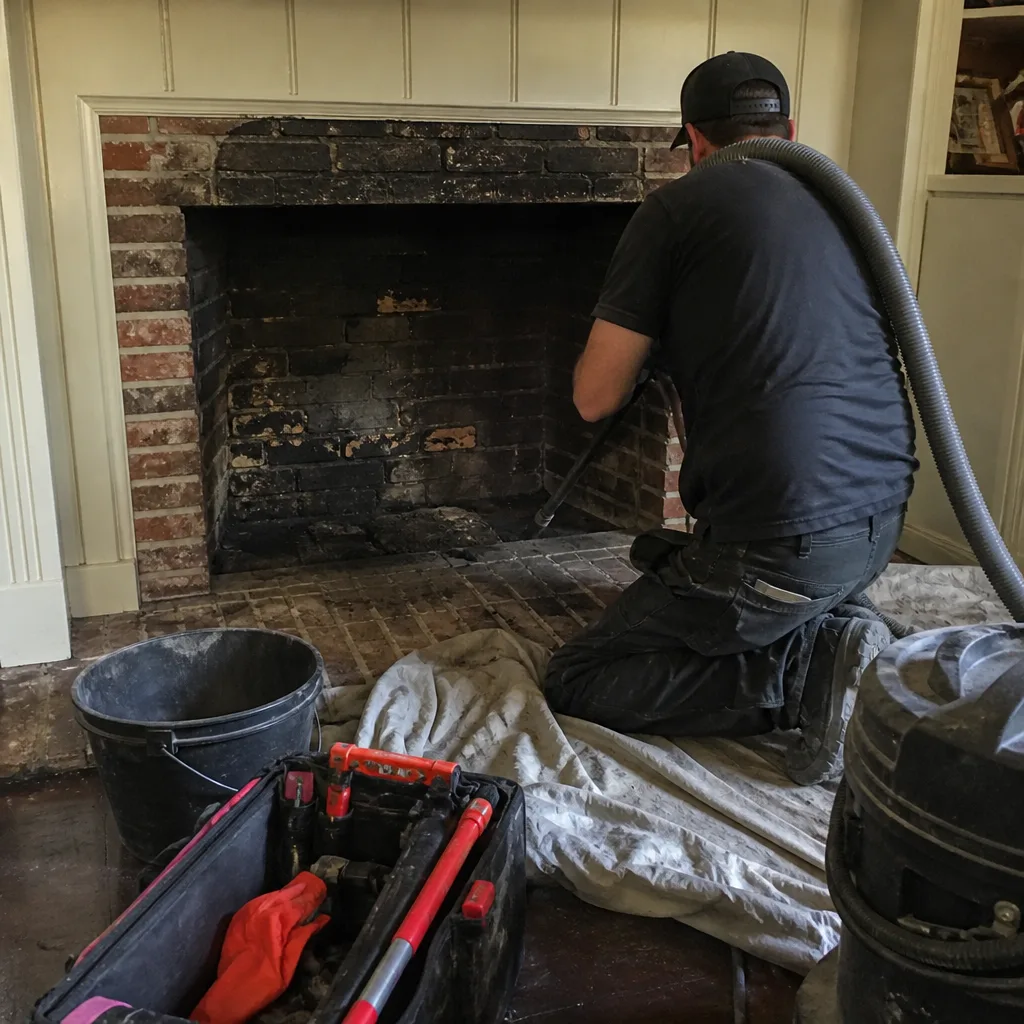 Before
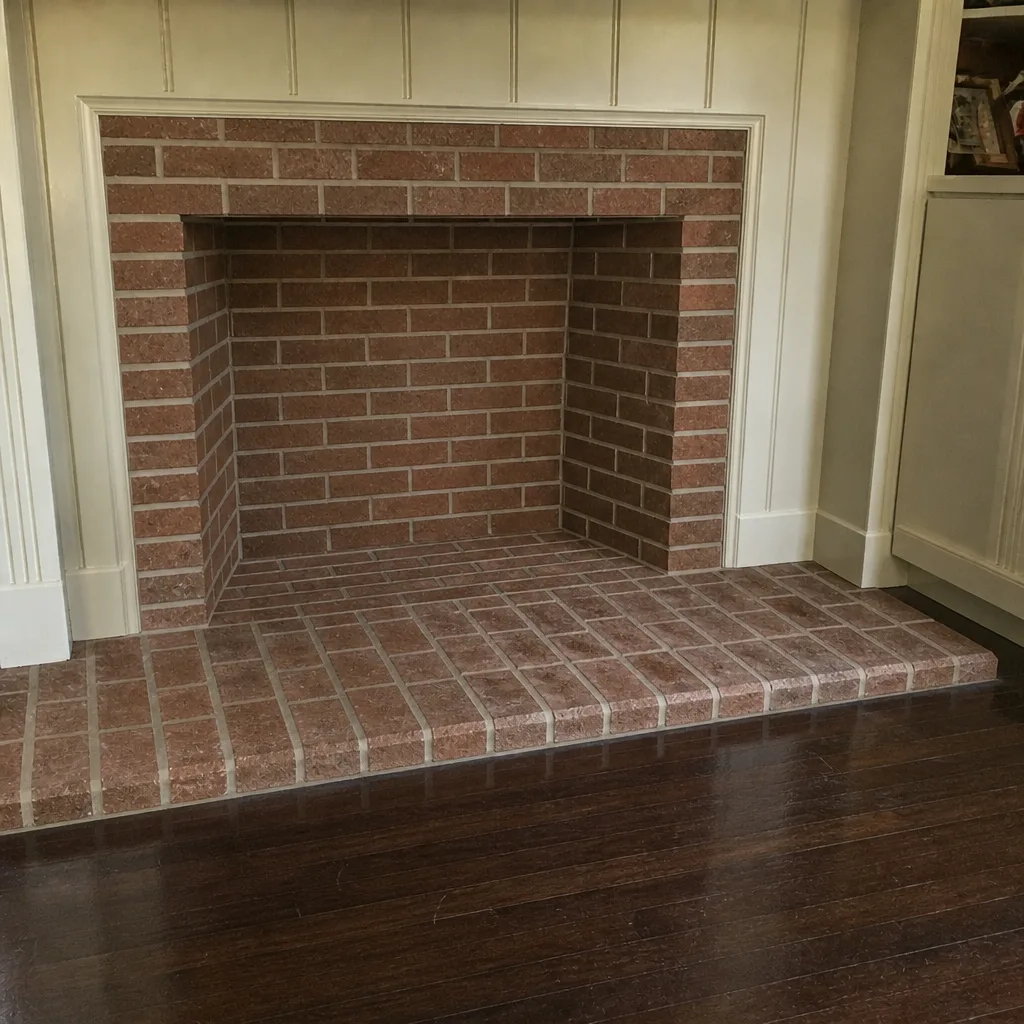 After
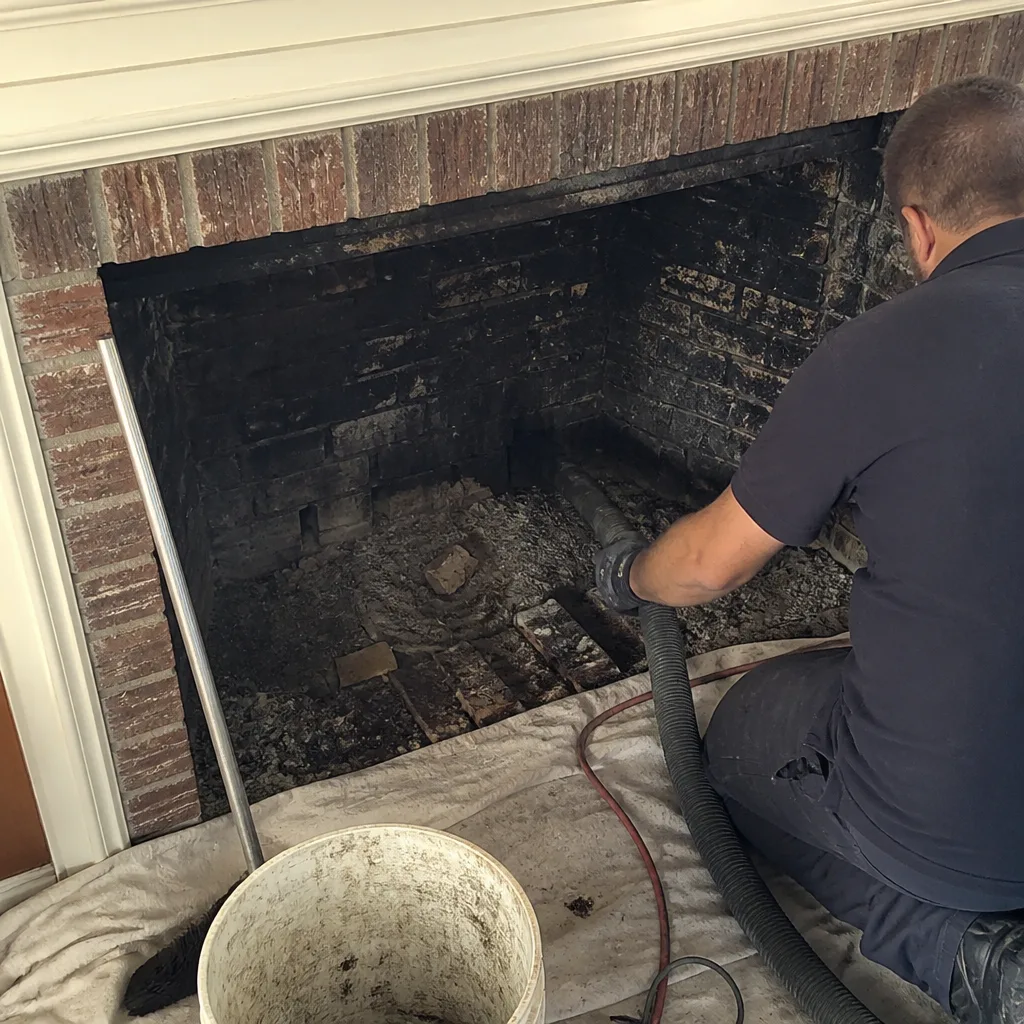 Before
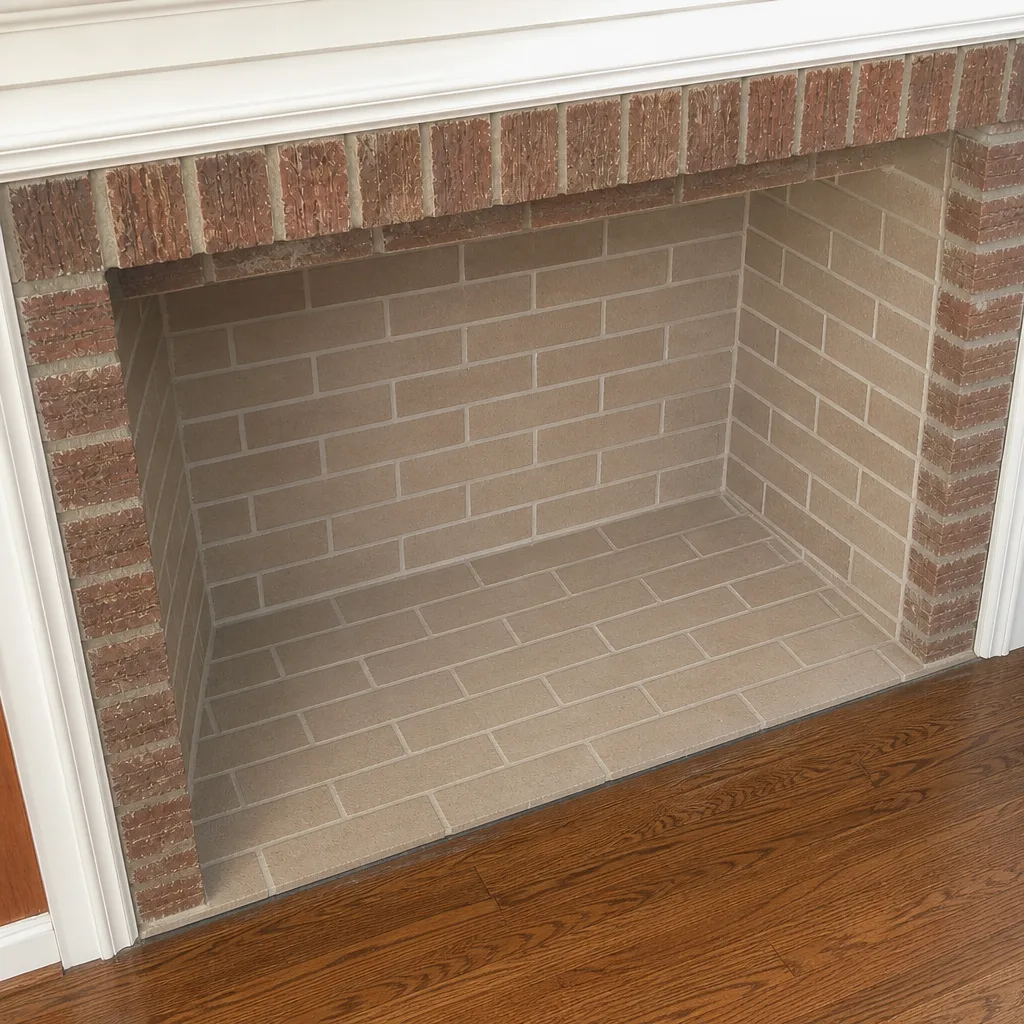 After
When to Call a Professional
Some signs are worth a call. If you’ve seen smoke roll into the room when you open the firebox, that’s a draft problem that needs assessment. If the fireplace smells smoky when it isn’t running, that points to a liner or draft issue and shouldn’t wait. If you see crumbly mortar, white staining that keeps returning, or a cap that’s off or damaged, the exterior is telling you water is getting in. If you’re planning an insert installation, a gas conversion, or a home sale, an inspection belongs on the schedule before any of it. If a flue has glazed, hard creosote, it needs professional removal – that grade of buildup is not a homeowner project. The same goes for anything involving the liner itself, high-tension components, or work at height on the roof. Those are jobs for a trained technician with the right equipment and the right materials on hand. Chimney Sweep Cary offers free estimates in Cary – call (833) 519-6077 to get one scheduled.
Frequently Asked Questions
A chimney should be inspected once a year, and swept whenever a measurable layer of creosote has built up. For a household that burns wood regularly through the season, an annual sweep before the first fire of the fall is the practical standard. If you burn occasionally, the annual inspection is still worth doing, because it’s how you catch the signs that aren’t visible from the ground. Call (833) 519-6077 for an exact quote – estimates are free.
A smoke smell when no fire is burning usually means the flue isn’t sealed properly, and that’s a liner or draft issue rather than a cleaning issue. A gap at a liner joint, an appliance connector that’s come loose, or a damper that won’t seat can all let combustion gases back into the living space. It’s the single most useful warning sign in this guide. A camera inspection is the way to confirm it. Call (833) 519-6077 for an exact quote – estimates are free.
White staining, called efflorescence, is a moisture indicator, not a cosmetic problem. It’s salt drawn out of the masonry by water and left behind as the moisture evaporates. If it’s appearing, the masonry is getting wet, and the source is typically a failed crown, a missing or damaged cap, or cracked flashing. On a chimney with persistent staining, the flue should be checked as well, because wet masonry and a cracked liner often go together. Call (833) 519-6077 for an exact quote – estimates are free.
You can do the ground-level visual check and the five-minute damper test yourself. What you can’t do yourself is look inside the flue above the damper, assess the liner, or make a judgment about whether creosote buildup is safe to burn with. That part needs a camera and a trained eye. The exterior and the firebox give you good information; the inside of the flue is the part that needs a professional. Call (833) 519-6077 for an exact quote – estimates are free.
No. That’s why the smell category matters. Creosote smells like tar or campfire and points to a cleaning issue. Wet masonry smells damp and musty after rain and points to a water problem at the cap, crown, or flashing. Exhaust backdraft has an acrid, smoky quality even when no fire has burned, and that’s the one that points to a liner or draft problem. If you can’t tell which one you’re smelling, the inspection sorts it out. Call (833) 519-6077 for an exact quote – estimates are free.
Gas inserts and prefab metal-flue systems show different signs than masonry fireplaces. Persistent condensation inside the firebox, lazy yellow flames where the flame was once mostly blue, a corrosive metallic smell after the unit has been running, rust at the flue joints, and visible gaps between flue sections are all signs that don’t appear on a masonry chimney. If you’re converting to gas or installing an insert, the liner needs to be assessed as part of the job. Call (833) 519-6077 for an exact quote – estimates are free.
It isn’t a legal requirement, but it’s the practical move. A pre-sale chimney inspection documents the condition of the flue, the firebox, and the exterior before a buyer asks. It protects you from a last-minute negotiation over a chimney you had no idea needed work. The same applies to buyers – a pre-purchase inspection tells you what you’re inheriting. Either way, an inspection with photos of what’s found is worth having before the closing. Call (833) 519-6077 for an exact quote – estimates are free.
The Bottom Line
The warning signs that matter in a Cary chimney are rarely the dramatic ones. A faint smoke smell when there’s no fire, white staining that keeps coming back, mortar joints that look recessed, a damper that won’t seat, a little condensation inside a gas insert. These are the signs that show up in real inspection reports. They’re also the ones easiest to talk yourself out of. The key habits: check the exterior from the ground each fall, do the damper test before the first fire, and treat a smoke smell when nothing is burning as a reason to inspect. Our technicians have up to 9 years of experience documenting what a flue actually looks like, and we’d rather tell you a repair can wait than sell you one that can’t. If you’ve spotted any of these signs, the camera will give you the answer.
Call (833) 519-6077. We answer 24/7. Fast dispatch from 7am to 7pm, Sunday through Friday. Estimates are free. Whether you’re in a newer home near WakeMed or an older property near downtown Cary, an inspection is the starting point, and it’s a starting point we’re glad to give you.
Written by the team at Chimney Sweep Cary.