
Last updated November 16, 2026
 Sweep & inspection
 Caps & crowns
 Flue relining
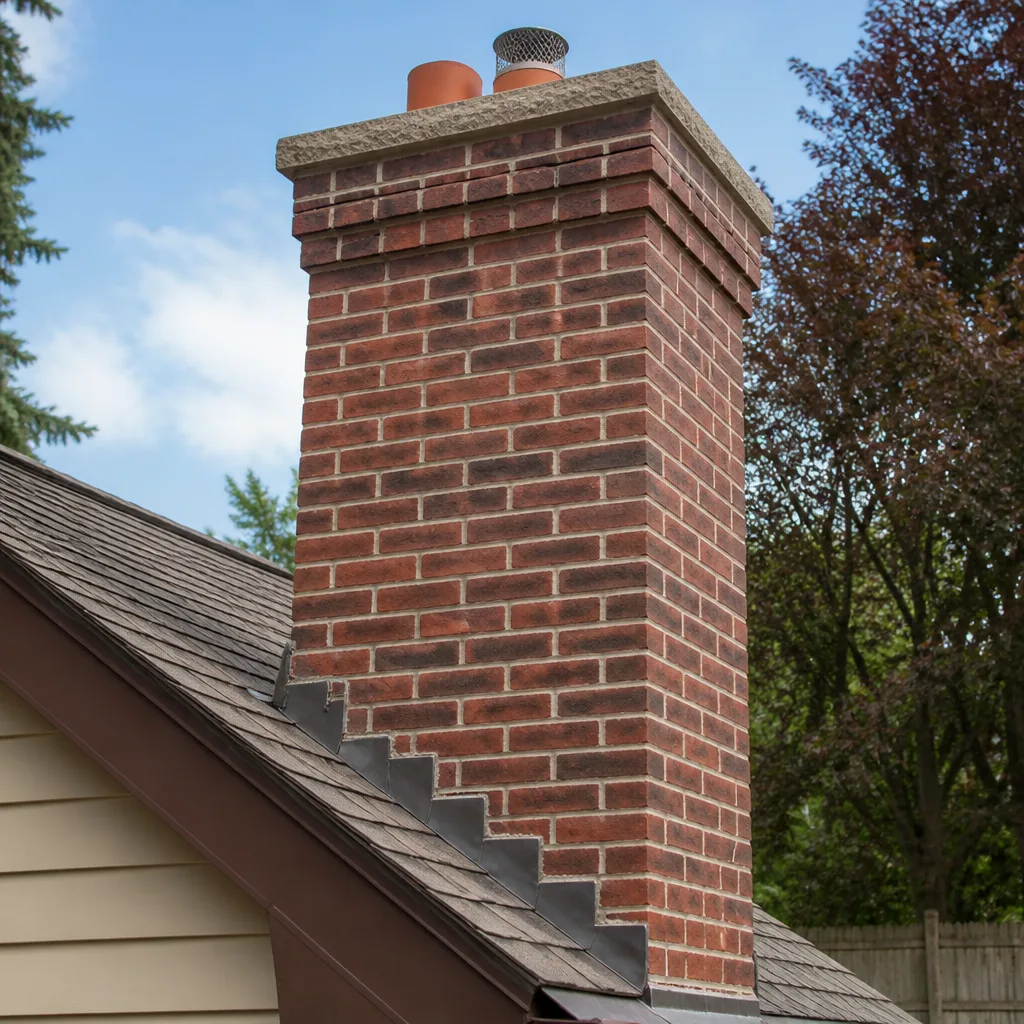 Masonry repair
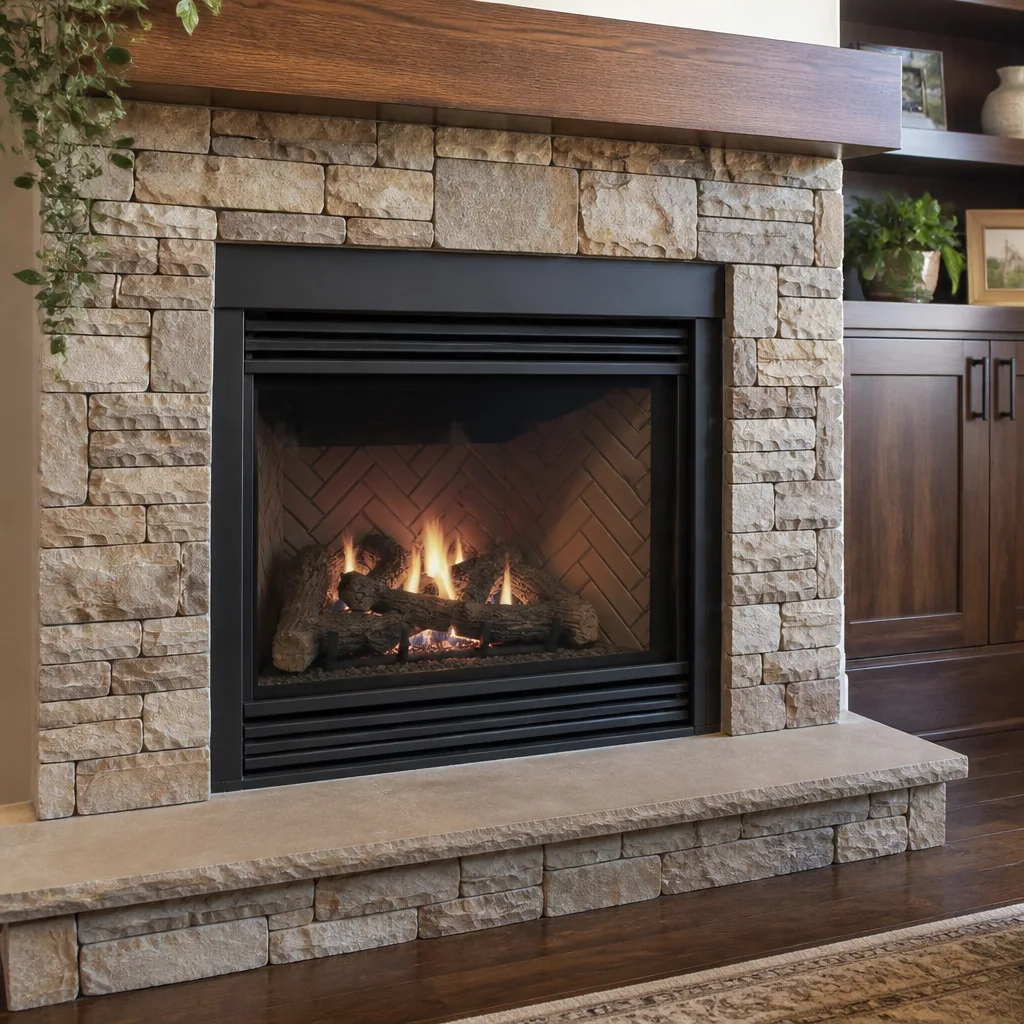 Gas fireplace service
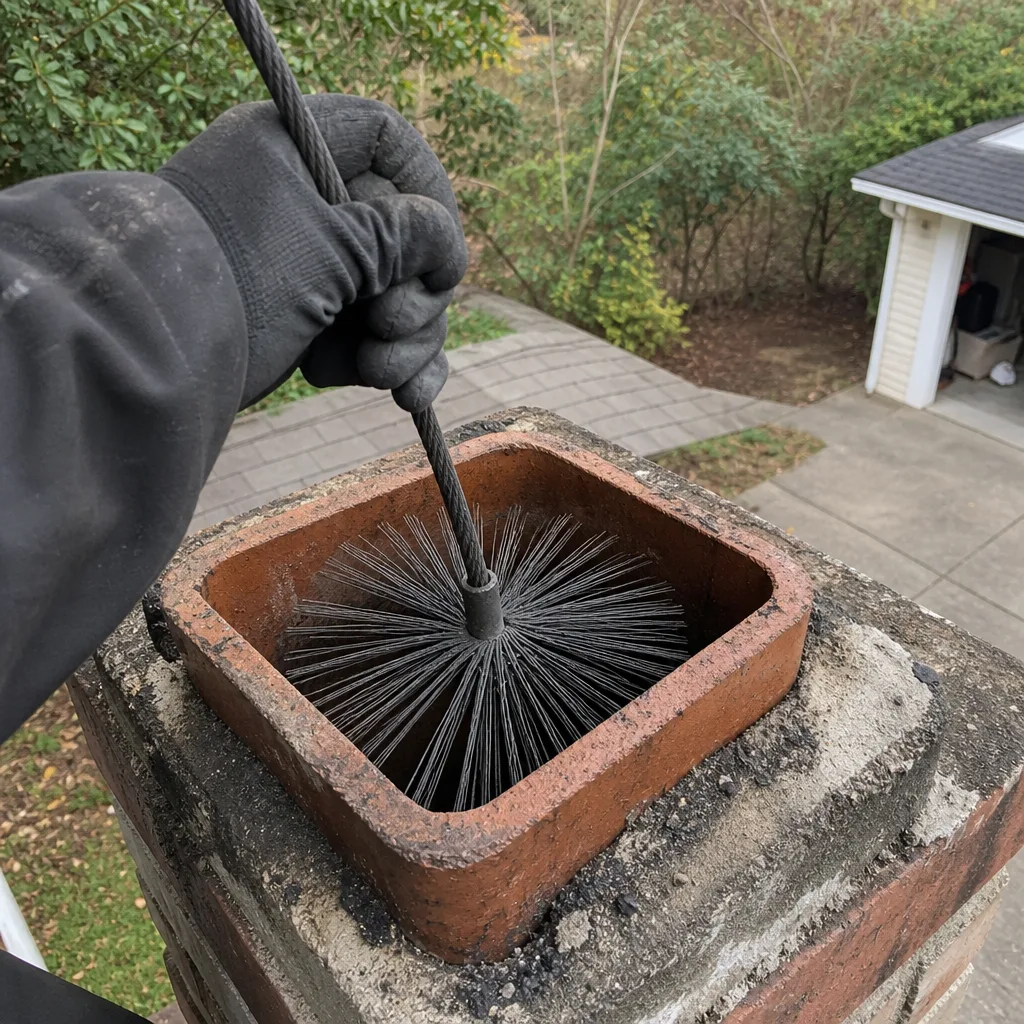
Level 1 sweep and inspection to the NFPA 211 annual standard - flue, crown, cap, and flashing checked and photographed
Chimney sweep logs do not sweep chimneys. They loosen some creosote - which then falls where a brush and vacuum still have to collect it.
Chimney Sweep Troubleshooting in Cary: Common Problems and How to Fix Them
If a technician can’t tell you why your chimney is smoking back before they start work, that’s a red flag, not a reason to approve a quote. Smoke rolling into the room, a draft that never quite catches, a smell that shows up in July – these are symptoms with specific, diagnosable causes. Most of them point to one of a handful of fixable conditions: negative pressure in the house, a flue sized wrong for the appliance, creosote that has reached a stage where it changes how the chimney behaves, or damage to the cap and crown. This guide is about reading those symptoms. If you can describe what you’re seeing accurately, you can avoid paying for the wrong fix. We work on chimneys in Cary every week, and the pattern holds: the homeowner who knows the difference between rollback and odor usually gets to the right repair faster.
Quick Answer
Most chimney problems in Cary come down to four root causes: negative pressure (the house pulls harder than the chimney does), a flue that’s the wrong size for the fireplace or stove, creosote buildup past the point where it changes draft behavior, or damage to the cap, crown, or flue tiles. Smoke rollback points to pressure or flue sizing. Odors point to creosote or moisture. Slow ignition and weak draft point to blockages, pressure, or a cold flue. Visible soot and staining point to incomplete combustion or a draft problem that’s been running a while.
Styles & brands we work with
- Sweep & inspection
- Caps & crowns
- Flue relining
- Masonry repair
- Gas fireplace service
Table of Contents
- The Symptom Map: What Each Problem Actually Points To
- Smoke Coming Into the House: Reading the Cause
- Why Cary’s Mix of New and Older Homes Creates Different Problems
- The Firebox Visual Check: What You Can See Before Calling Anyone
- The Two Most Commonly Misdiagnosed Problems
- Safe to Monitor vs. Stop Using the Fireplace Now
- Odors, Soot, and Creosote: Matching the Stage to the Fix
- Caps, Crowns, and What Water Does to a Chimney
The Symptom Map: What Each Problem Actually Points To
Start with the symptom, not the solution. Homeowners in Cary tend to search for the fix (“chimney cap replacement,” “creosote removal”) before they’ve identified the problem, and that’s how people end up paying for work that doesn’t address what’s actually happening. The map below is the one we use when we walk through a diagnosis.
- Smoke rolling back into the room, especially on start-up: negative pressure, a cold flue, or a flue that’s undersized for the firebox opening.
- Smoke entering the room throughout the burn, not just at start-up: negative pressure from exhaust fans or a tight house, a partial blockage (bird nest, leaf pack, collapsed tile), or a flue sizing problem.
- Weak draft and slow ignition: a cold exterior chimney, blockage, or a house that’s tighter than the chimney can overcome.
- Odor when the fireplace isn’t in use, especially warm days: creosote in the flue off-gassing, or moisture getting in through the top.
- Visible soot on the firebox walls or smoke staining above the opening: incomplete combustion, wet wood, or a draft issue that’s been ongoing.
- Water in the firebox or rust on the damper: missing or damaged cap, failed crown, or cracked flue tiles letting water track down.
- Crumbling mortar in the firebox or on the smoke chamber: heat and moisture cycling through the masonry, common after years of use.
Notice that “creosote” shows up in only one of these. It’s the first thing most people assume, and it’s frequently wrong – more on that below. If you want to understand the baseline service that keeps a chimney out of the troubleshooting column in the first place, our chimney sweep page covers what a routine cleaning actually involves.
Smoke Coming Into the House: Reading the Cause
Smoke rollback is the single most common complaint we hear in Cary, and the single most common reason it happens has nothing to do with the chimney being dirty. It’s pressure. A chimney works because warm exhaust is lighter than the outside air, so it rises. If the house is pulling air in harder than the chimney is pulling smoke up, the smoke goes where the pressure goes – into the room.
How to tell pressure from blockage
- Test the timing. If smoke rolls back only at start-up and settles once the flue warms, that’s a cold-flue or start-up pressure issue, not a blockage.
- Test the fan theory. Run the range hood, a bathroom exhaust fan, or the dryer. If the problem gets noticeably worse, the house is depressurizing faster than the chimney can draft.
- Test the weather. If it happens on mild, damp, or windy days but not cold ones, that points to flue temperature and stack effect, not obstruction.
- Open a window an inch. If a cracked window near the fireplace solves it instantly, you’ve confirmed negative pressure. It’s also not a fix – it’s a diagnostic.
If none of those change anything and the smoke is steady through the entire burn, that leans toward a physical blockage or a flue sizing problem. Bird nests, leaf packs, and collapsed flue tiles all produce that pattern, and they need a camera inspection to confirm rather than a guess. A cap that’s the wrong size or has lost its screening lets birds and debris in, which is why we fit caps from Gelco and Olympia Chimney rather than whatever’s on the shelf – the fit is the point.
A word on firebox geometry, because it’s an underrated cause: a firebox opening that’s too tall relative to the flue’s cross-section will smoke back no matter how clean the flue is. The smoke chamber above the damper needs to funnel correctly. If a previous owner opened up a fireplace for a bigger look, the ratio may have been thrown off, and no amount of sweeping will solve it.
Why Cary’s Mix of New and Older Homes Creates Different Problems
Cary has two very different chimney profiles, and they fail in opposite directions.
Newer tight-sealed construction
Homes built in the last couple of decades in Cary are built tight. Modern windows, spray foam, house wraps, and sealed mechanical rooms mean the house doesn’t leak air the way older homes did. That’s good for your energy bill and bad for your chimney, because a chimney needs replacement air to draft. When a tight house runs a kitchen fan, a bath fan, or a clothes dryer, it pulls from wherever it can – and if the only opening is the fireplace, it pulls smoke down the flue. This is the number one cause of smoke complaints we diagnose in newer Cary neighborhoods.
The fix usually isn’t structural. It’s managing pressure: a dedicated outside air supply, avoiding simultaneous exhaust use with the fireplace, or warming the flue before ignition. Sometimes it means confirming the flue was sized for the appliance actually installed, which becomes a real question if someone swapped a wood-burning insert in after the fact.
Older ranch and mid-century homes
Older ranch homes common in the established parts of Cary tend to have masonry chimneys with clay tile liners. Those tiles crack. The mortar in the smoke chamber parges and erodes. Crowns crack and let water in. And older fireplaces were often built for open-hearth burning, not for the inserts and stoves that have been added since. The problems here are structural, not pressure-related: cracked tiles, gaps at the thimble, deteriorated mortar.
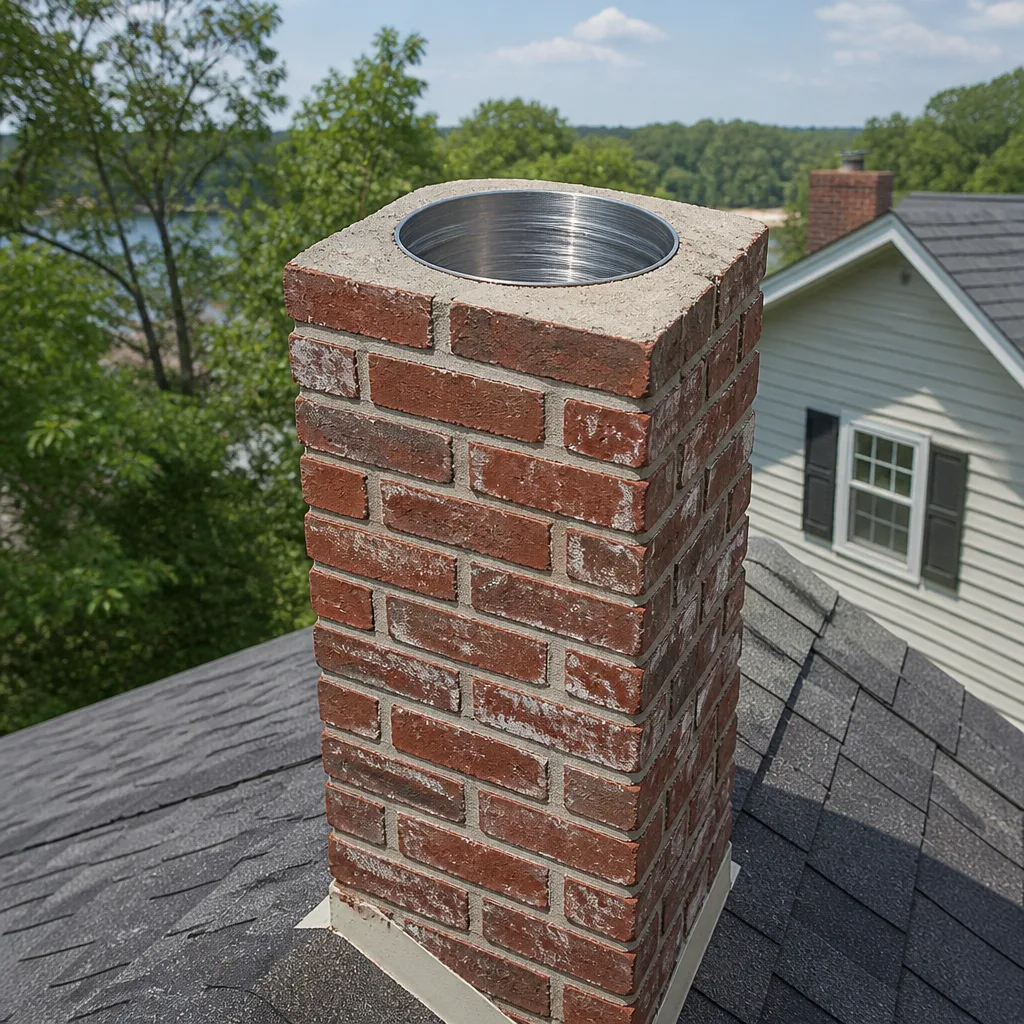
The good news is that older masonry isn’t a knockdown. A HeatShield resurfacing system can restore a damaged flue from the inside without demolition in many cases, and a DuraFlex flexible liner handles the situations where the original tiles are beyond resurfacing. Those are the two repairs that separate a diagnostic-only sweep from a provider who can actually finish the job. You can see the full scope on our chimney repair page.
The Firebox Visual Check: What You Can See Before Calling Anyone
You can do a lot of useful looking from the firebox opening without tools, without a ladder, and without putting yourself near anything dangerous. This check isn’t a substitute for an inspection – it’s a way to describe what you’re seeing accurately so the first conversation is useful.
- Look up at the damper and smoke chamber. You’re checking for rust, white staining, crumbling parging, or daylight. Rust points to water getting in from above. Crumbling parging is heat and moisture damage. Daylight means a gap you need looked at.
- Look at the firebox walls and back wall. Hairline cracks in firebrick are normal. Missing chunks, gaps in the mortar joints, or brick that’s spalling are not.
- Look at the damper plate. Does it open fully? Does it close flat? A damper that won’t open all the way will smoke back regardless of flue condition.
- Look up the flue with a flashlight. You’re looking for visible soot patterns, shiny glazed creosote, water staining, or an obvious obstruction like a nest.
- Look at the hearth and the wall above the opening. Smoke staining above the opening means rollback has been happening for a while. Loose or missing hearth material is a clearance question, not a cosmetic one.
Do not climb onto the roof, and do not reach up into the smoke chamber or flue by hand. The firebox is the safe viewing distance. If you see water staining, daylight, or glazed creosote, that’s enough to book an inspection rather than wait until the season starts.
The Two Most Commonly Misdiagnosed Problems
Misdiagnosis one: draft problems blamed on creosote
A chimney that smokes back does not automatically need a sweep. In our experience, a large share of rollback cases in Cary arrive as “probably needs a cleaning” and turn out to be negative pressure or a flue sizing mismatch. Sweeping removes creosote; it doesn’t change how the house moves air. The tell is timing and pattern: if the smoke comes back at start-up, or only when exhaust fans are running, or only on warm or windy days, a sweep won’t fix it and you’d be paying for a service that doesn’t address the symptom.
What to do instead: ask whoever diagnoses the problem to explain why they believe creosote is the cause, and what evidence they’re basing it on. If the answer is “we’ll see when we get up there,” that’s a reasonable first step, but it shouldn’t be presented as the fix before the cause is identified.
Misdiagnosis two: liner damage blamed on the damper
The damper is visible, moves, and makes noise, so it gets blamed for a lot of things it didn’t do. A damper that seems “stuck” or a fire that won’t draw often turns out to be a cracked flue tile or a gap in the smoke chamber parging – the damper was fine the whole time. A thorough inspection with a camera will show which is which. If a technician recommends damper work without having verified the flue condition, that’s another red flag worth pausing on.
Underneath both misdiagnoses is a shared principle: don’t replace parts until you can explain the symptom. If someone can’t connect what you’re seeing to what they want to fix, get a second opinion.
Safe to Monitor vs. Stop Using the Fireplace Now
Homeowners ask us this more than any other question, and the answer isn’t always “stop everything.” Some conditions can be watched until the inspection. Others should end fireplace use today. Here’s the split we use.
Can safely monitor until inspection
- Hairline cracks in firebrick with no gaps or missing material.
- A light haze of soot above the firebox opening.
- Occasional start-up smoke that clears once the flue warms.
- Odor when the fireplace is off during warm weather, if you haven’t had a fire in a week or more.
Stop using the fireplace now
- Water in the firebox, or active dripping from the damper or smoke chamber.
- Visible glazed creosote on the flue walls, which is the stage that ignites easily.
- Crumbling or missing material in the smoke chamber, or daylight visible at the damper.
- Any gap where smoke or gases could enter the room at a joint or thimble.
- Carbon monoxide detectors going off. Leave the house, call the fire department, do not test a theory.
- A strong, sharp, chemical-like smell that persists when there’s no fire in the chimney.
Creosote stages are worth knowing because they inform the “stop or monitor” decision. First-stage creosote is a soft, flaky dust you can sweep out. Second-stage is a crusty, flaky deposit that a standard sweep can remove. Third-stage is glazed and tar-like, and it’s the one that ignites. If you can see a shiny, black, glassy coating on the flue interior, treat that as stop-and-call, not wait-and-see.
Carbon monoxide is a separate concern from chimney fire, and it’s the more serious one. A blocked or damaged flue can send combustion gases back into the room instead of up. That’s why a working detector on every level of the home belongs in every Cary house that burns wood, and why a draft problem that has been “manageable” for years deserves a real inspection rather than tolerance.
Odors, Soot, and Creosote: Matching the Stage to the Fix
The smell test is one of the most reliable early warnings a chimney gives you, and it’s one most homeowners learn to read backwards. A smell in the room when the fireplace is cold isn’t a sign the chimney is fine – it’s a sign it’s holding something that shouldn’t be there. Creosote in the flue off-gasses when the chimney warms up, and so does moisture that has soaked into masonry or tile.
Odor patterns and what they mean
- Sharp, creosote-like smell on warm days: creosote deposits in the flue, often second-stage. A sweep usually resolves it.
- Musty or earthy smell: moisture in the masonry, typically from a failed cap or crown above.
- Smoky smell that shows up when exhaust fans run: negative pressure drawing flue gases back into the room, even without a fire.
- Stronger smell after rain: water intrusion from above, tracking down the flue or the smoke chamber.
Soot tells a parallel story. Light, even soot on the firebox walls is normal. Soot concentrated on one side or streaking above the opening points to air moving wrong. Heavy, black soot throughout the firebox usually points to incomplete combustion – wet wood, an undersized flue, or both. The fix here isn’t cosmetic; you’re looking at a draft or fuel problem that will keep producing the same result until it’s diagnosed.
Creosote removal is part of any routine sweep, and third-stage creosote needs more than a standard brushing in most cases. If a technician tells you your chimney is “clean” after a sweep but the glazed coating is still there, ask how they handled it specifically. The right answer will involve a rotary method, a chemical treatment, or a recommendation for relining – not a shrug.
Caps, Crowns, and What Water Does to a Chimney
Water is the quietest problem on this list and the one that causes the most damage over time. Every part of a masonry chimney is built to be dry. Once water gets into the crown, the flue tiles, or the smoke chamber, freeze and thaw cycles in Cary do the rest – water seeps in, expands as it cools, and slowly breaks apart the material from the inside.
What to look at from the ground
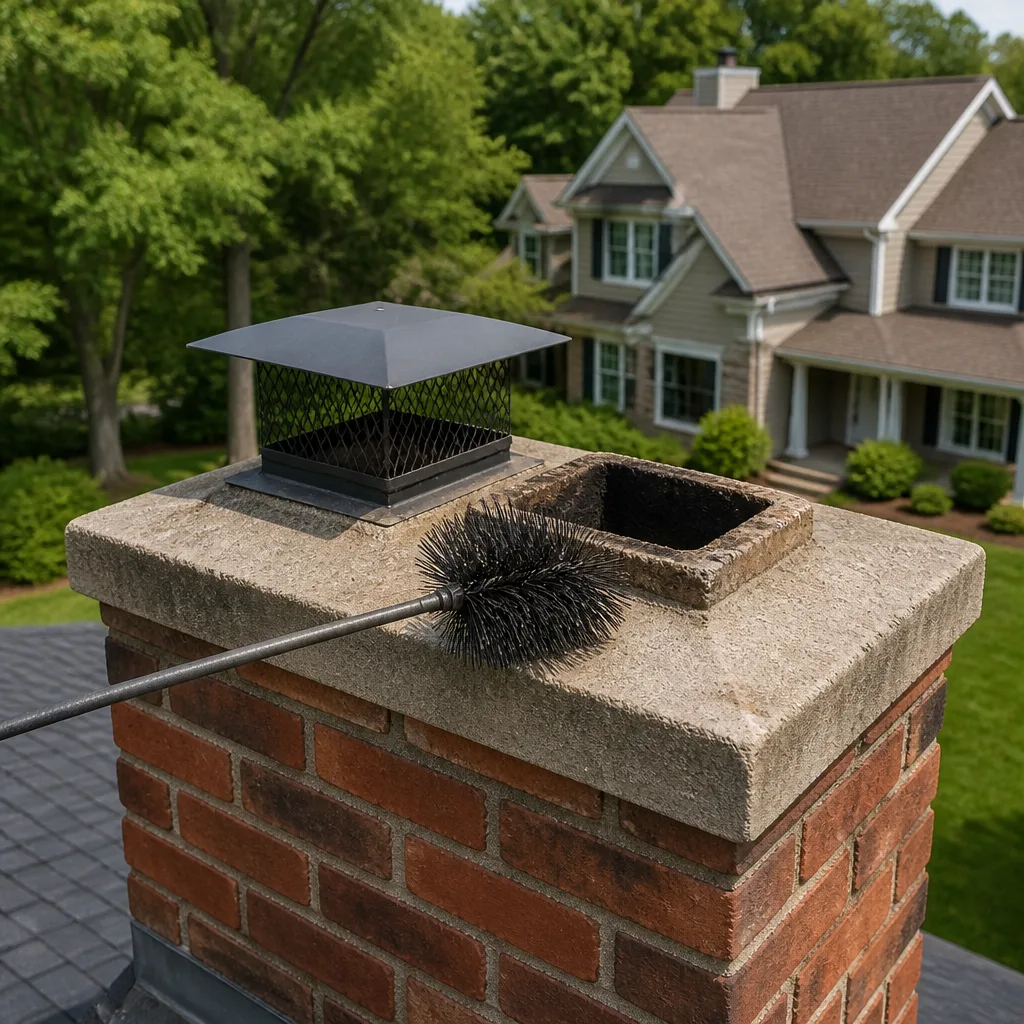
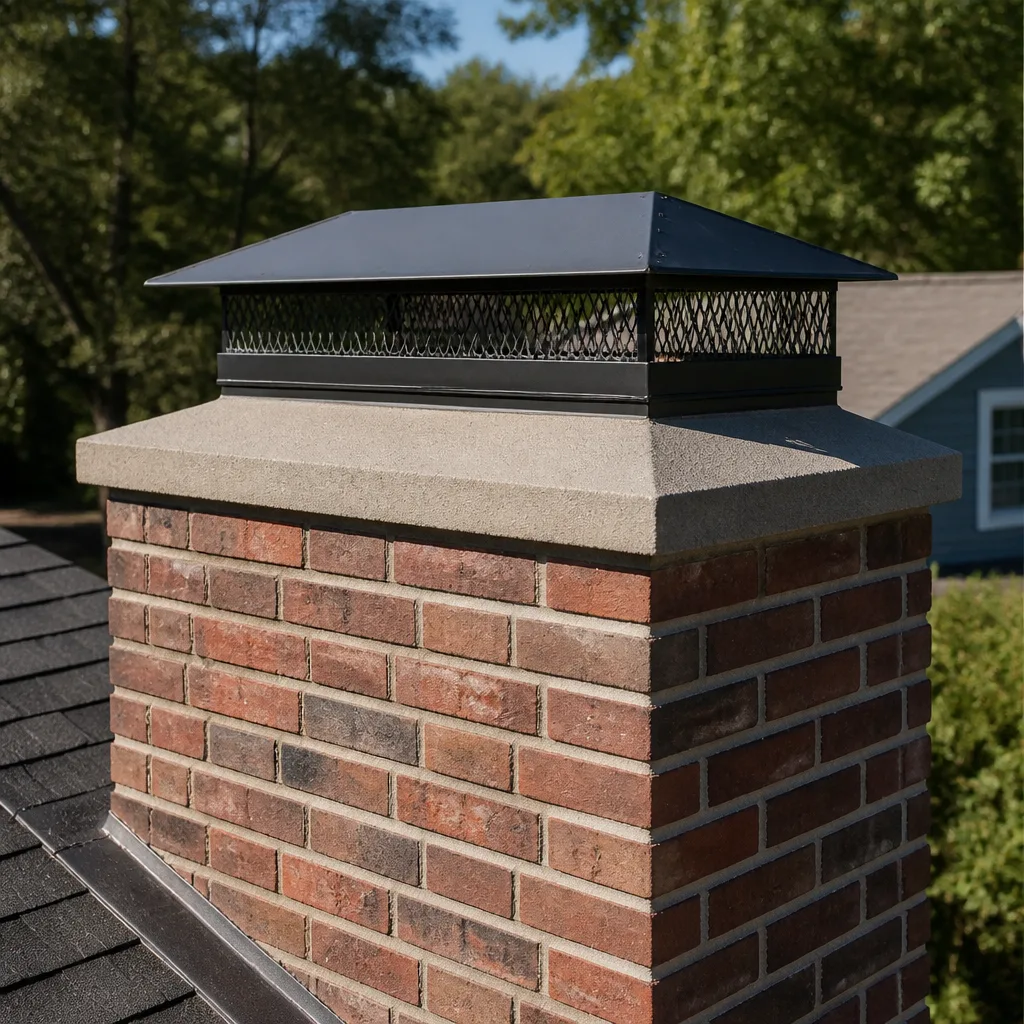
- The cap. Is it there? Is the screening intact? Is it sized to the flue, or sitting loose? A missing or loose cap is how birds, squirrels, and leaves get in, and it’s the first thing that turns a routine cleaning into an obstruction call.
- The crown. Look for cracks, chip-out at the edges, or a crown that has pulled away from the flue tile. A cracked crown lets water straight into the masonry below it.
- The flue tile tops. From a safe distance with binoculars or a phone camera, look for cracked or missing tile at the top of the chimney.
- The flashing where the chimney meets the roof. Failed flashing lets water into the roof and down around the chimney, which gets misread as a chimney problem when it’s a roofing one.
Caps and crown work are the kinds of repairs where the material matters. We source caps and components from Gelco, Olympia Chimney, Famco, and Copperfield rather than general hardware, because a cap that doesn’t fit correctly doesn’t do its job. Crown repair and flue top rebuilds are part of the same work as the sweep and the inspection, which is the practical advantage of working with a chimney-only provider. One specialist, start to finish, means no subcontracting between trades.
Your technicians have up to 9 years of experience, and the ones who diagnose caps and crowns are the same ones who will be back for the next sweep. That single-trade focus is why the troubleshooting is easier from our side than from a generalist’s.
Common Mistakes to Avoid
- Assuming smoke means a dirty flue. Roughly the wrong conclusion a lot of the time. If the smoke is worse when fans run or on start-up, the problem is pressure, not creosote, and a sweep won’t fix it.
- Burning unseasoned wood to “see if it helps.” It doesn’t. Green wood produces more creosote and less heat, which makes both the deposit problem and the draft problem worse. Seasoned wood, split and dried, belongs in a wood-burning fireplace.
- Skipping the cap because “it’s just the top.” The cap is what keeps water, birds, and debris out of the flue. Missing or loose caps are one of the most common reasons a Cary chimney needs repair instead of just a cleaning.
- Letting a small crown crack run for another season. Crowns don’t self-heal. A crack that gets through the freeze-thaw cycle in Cary turns a repair into a rebuild, and the water damage underneath is what drives the cost.
- Ignoring odor when the fireplace is cold. A smell in July isn’t a summer quirk; it’s a signal that something is in the flue or the masonry that shouldn’t be. The right response is a sweep and inspection before the first fire of the season, not a candle.
- Getting a “quick sweep” from a generalist who also does HVAC and gutters. A rush sweep that doesn’t include a flue look with a camera and a report of what was found is a service that hasn’t told you anything. Ask for the report.
- Assuming a stuck damper is a damper problem. As covered above, it’s frequently a flue or smoke chamber problem showing up at the damper. Confirm the flue condition before approving any damper work.
See the difference
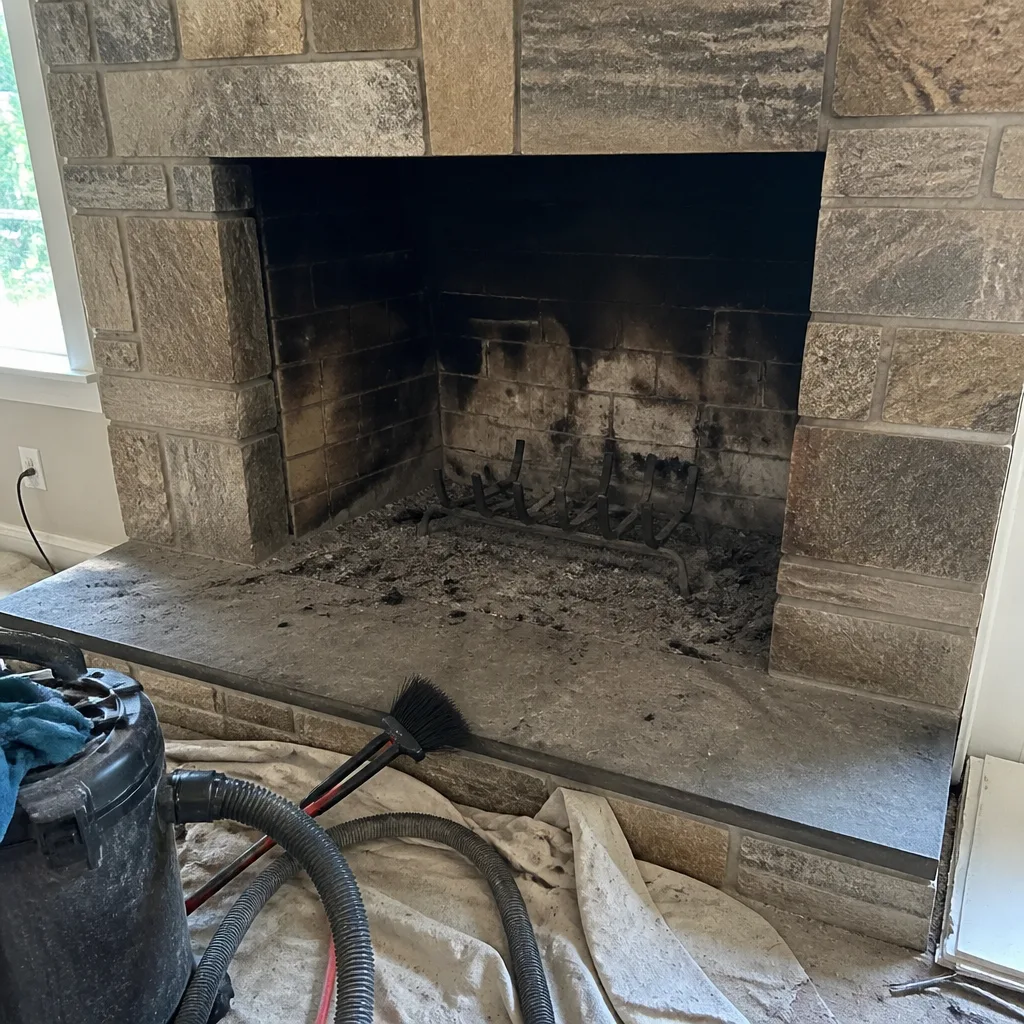 Before
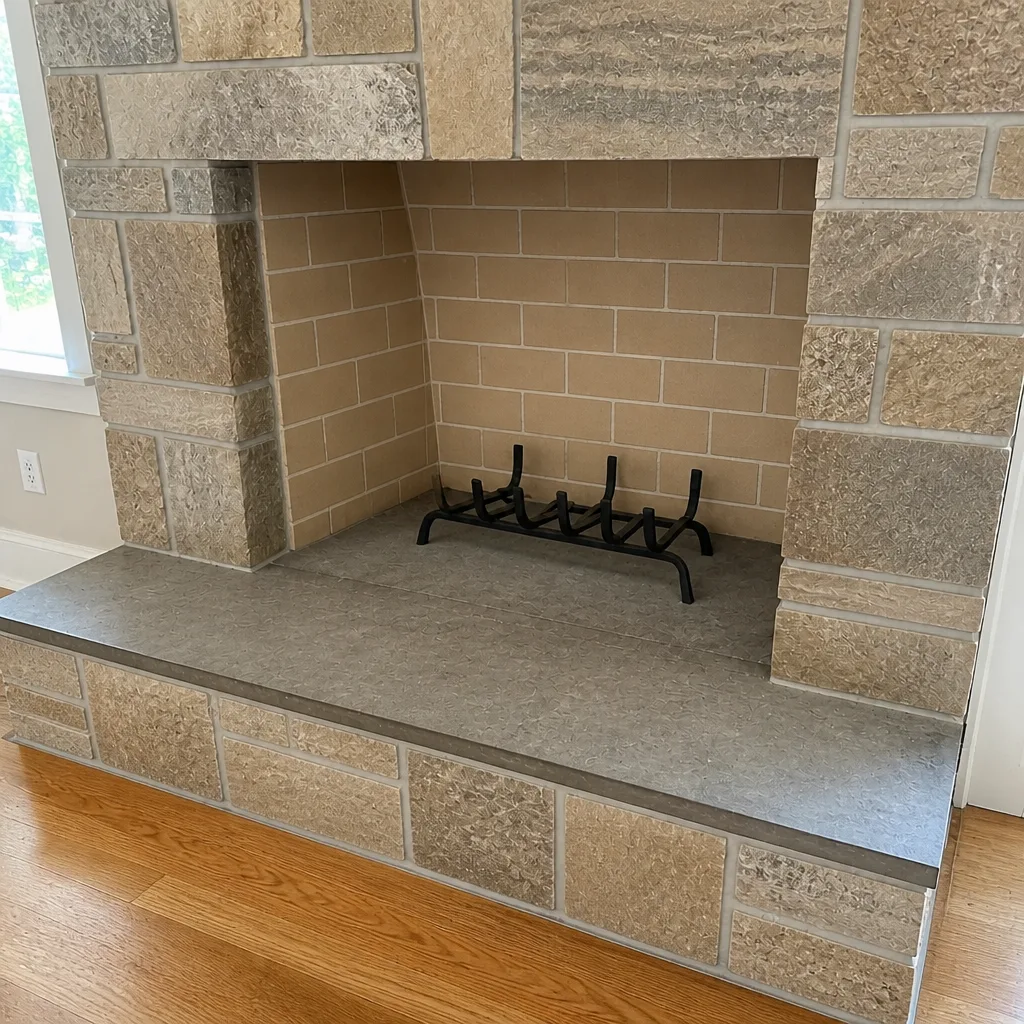 After
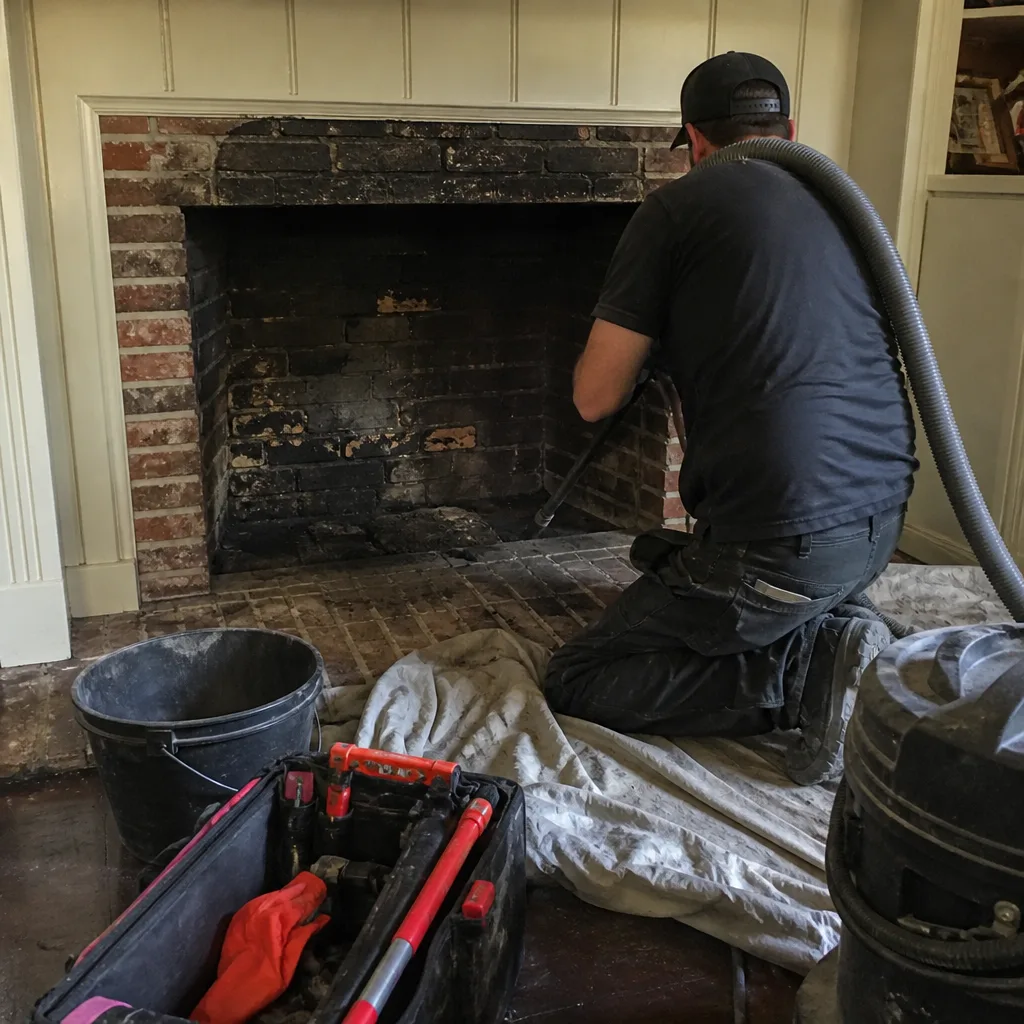 Before
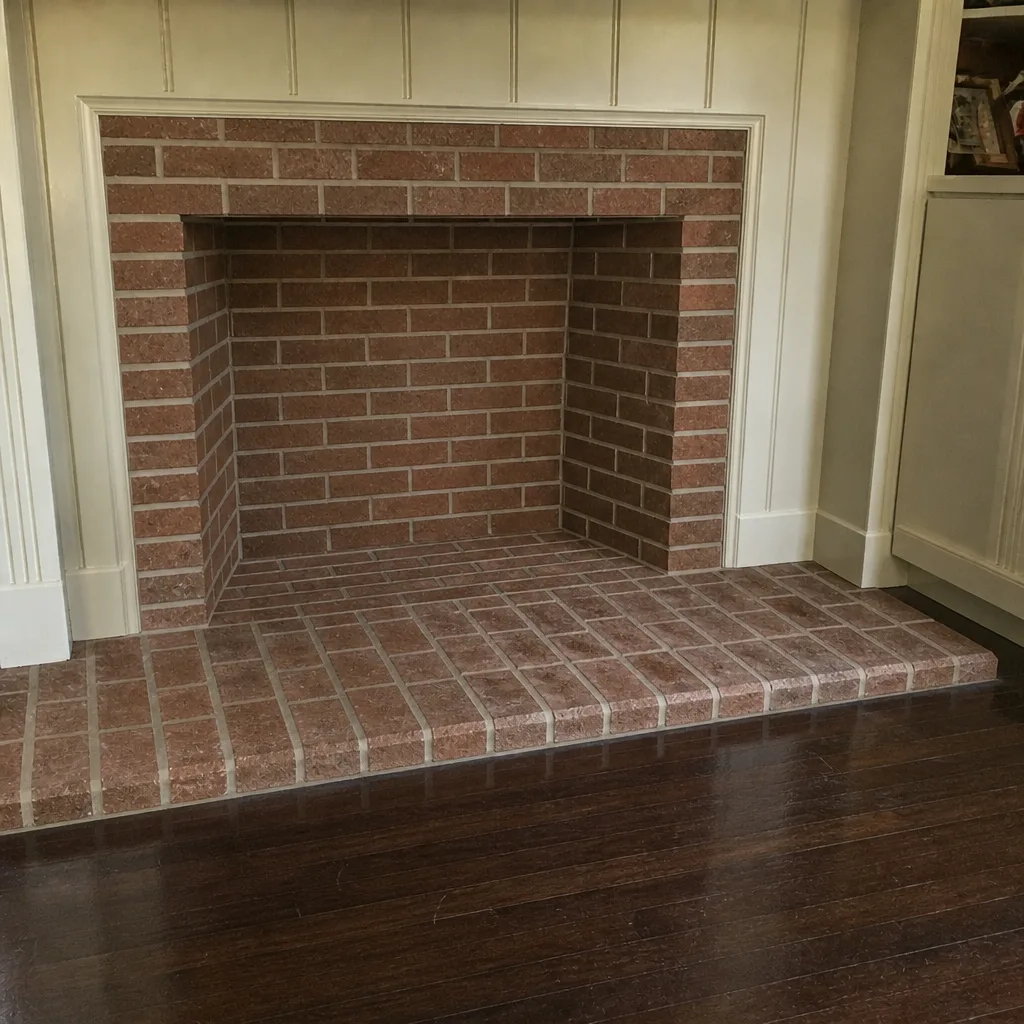 After
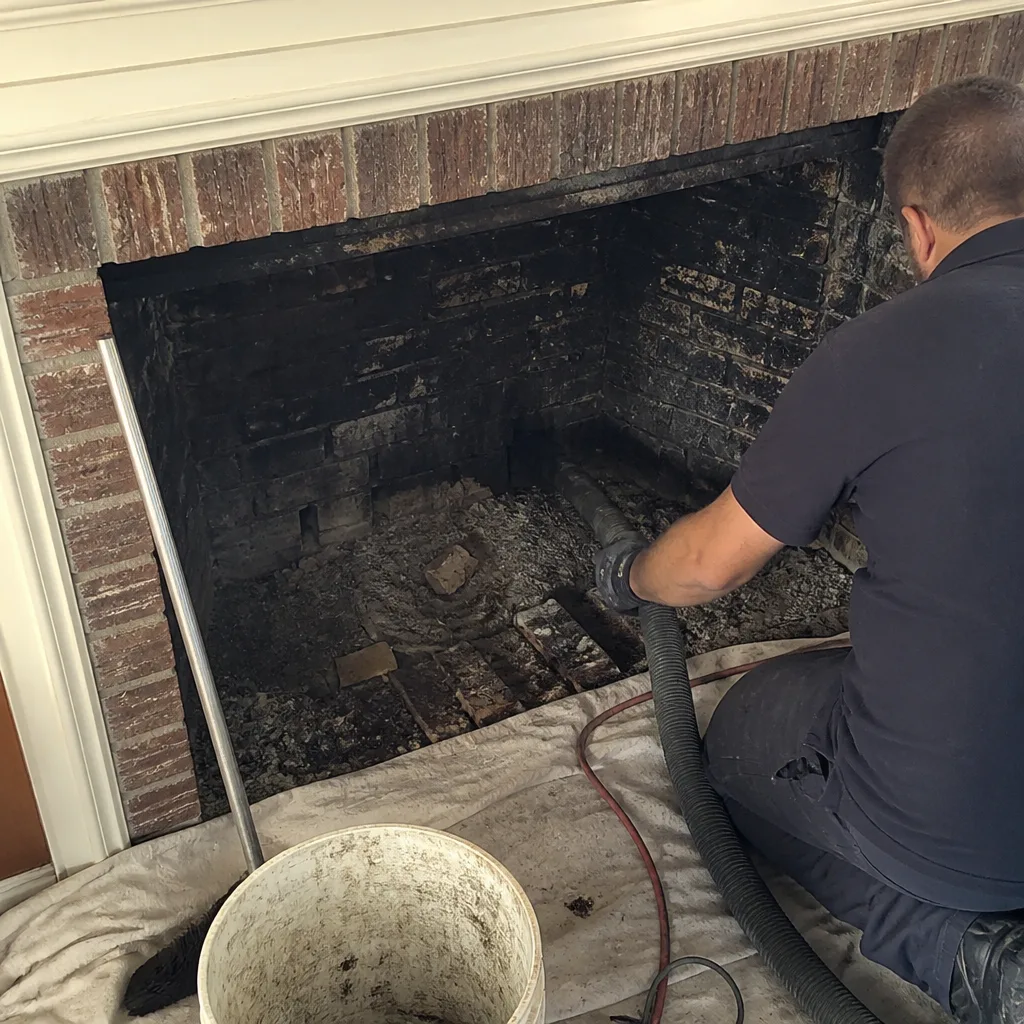 Before
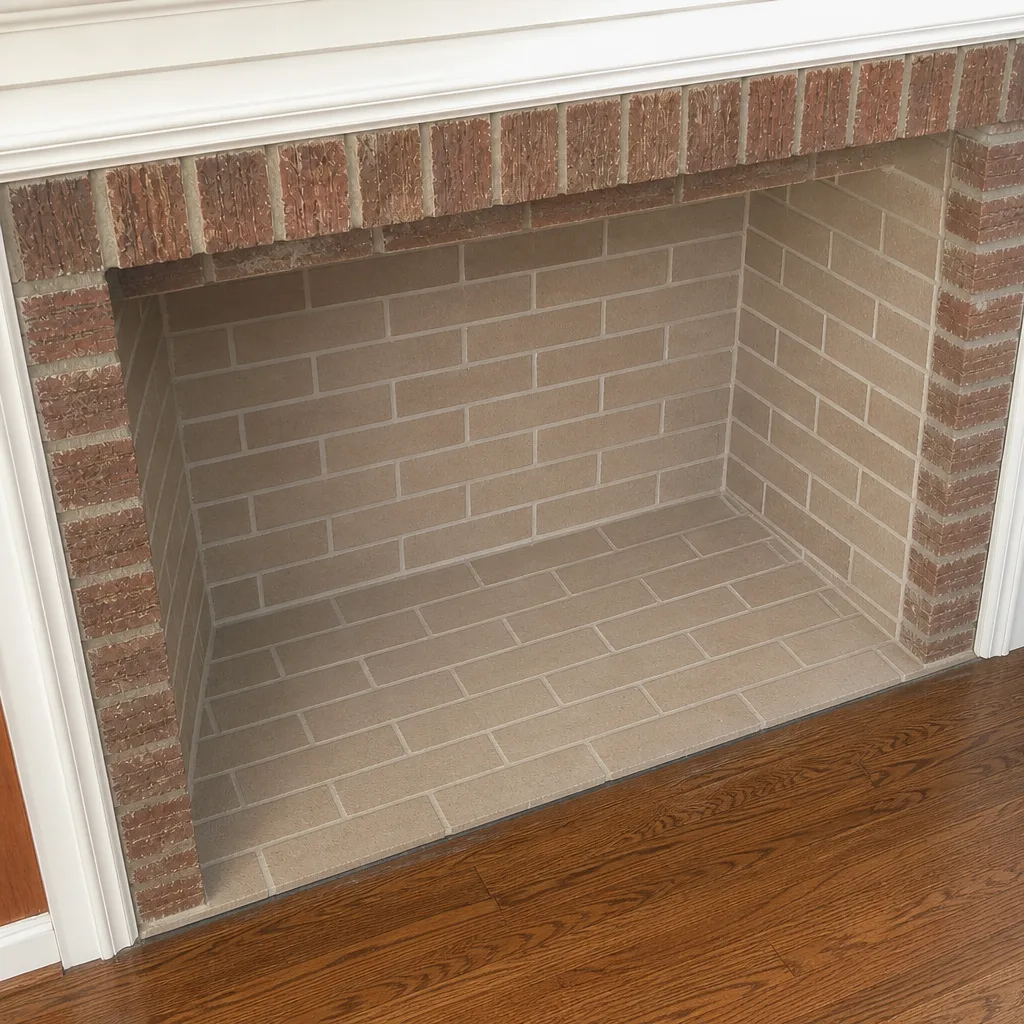 After
When to Call a Professional
Call a professional whenever the symptom is one you can’t safely diagnose from the firebox, and especially when it involves water, glazed creosote, or any doubt about whether the flue is structurally intact. Carbon monoxide detectors going off, visible daylight at the damper, crumbling smoke chamber parging, and rust on the damper are all reasons to book an inspection before the next fire. The same goes for a first fire in a home you just bought in Cary – you have no history on the chimney, and a pre-season sweep is the cheapest way to get one. Chimney Sweep Cary offers free estimates in Cary. Call (833) 519-6077. We answer 24/7. Fast dispatch from 7am to 7pm, Sunday through Friday.
If you’d rather see the broader picture of what we do for Cary homeowners, the main page lays it out.
Frequently Asked Questions
The most common cause in Cary is negative pressure, not a dirty flue. The house pulls air harder than the chimney does, usually because a kitchen fan, bathroom fan, or dryer is running, or because the home is tightly sealed and the chimney doesn’t have replacement air. A cold flue at start-up, a partial blockage like a bird nest, and an undersized flue all produce the same symptom. A camera inspection tells you which. Call (833) 519-6077 for a free estimate – we answer 24/7.
Diagnostic work is priced per job by the written estimate, and the estimate is free. A routine sweep and inspection is one category, a resurfacing or relining project is another, and the scope depends on what the inspection actually finds. We document what we find before quoting anything, so you’re approving a repair against a camera record, not a guess. Call (833) 519-6077 for an exact quote.
Only if the inspection shows the existing flue is cracked, gaps at the joints, or is sized wrong for the appliance. A HeatShield resurfacing can restore many damaged flues without full demolition, and a DuraFlex flexible liner handles the cases where resurfacing isn’t the right call. If neither is needed, we say so. Ask to see the camera footage – you should never be told you need a liner without evidence you can look at. Call (833) 519-6077 to book the inspection.
Once a year for a regularly used wood-burning fireplace, timed before the first fire of the season so the flue is inspected clean and ready. If you burn frequently or burn unseasoned wood, a mid-season check is reasonable. A sweep isn’t only about creosote removal – it’s also the point where the flue gets looked at with a camera, which is how most structural issues get caught early. Call (833) 519-6077 to schedule.
Creosote accumulates in stages, and the third stage is glazed and ignites easily. That’s the chimney fire risk most people know about. The less-known risk is carbon monoxide: a damaged or blocked flue can send combustion gases back into the room instead of up and out. Neither failure gives much warning. The sweep and inspection before the first fire are how you avoid both without having to think about them again. Call (833) 519-6077 – estimates are free.
Not reliably. We can help you narrow the symptom over the phone, and the visual check in this guide helps you describe what you’re seeing, but rollback, odor, and slow draft patterns can point to more than one cause, and the only way to confirm is a camera look at the flue and smoke chamber. That’s why the inspection matters more than the phone diagnosis. Call (833) 519-6077 to book one.
No, it’s a warning, not an emergency. A creosote or musty odor when the fireplace is off usually means deposits in the flue or moisture in the masonry from a cap or crown problem. Get it inspected before the season, not in July. If the smell is sharp and chemical, or comes with any symptom on the “stop using the fireplace now” list, treat it as urgent. Call (833) 519-6077 for an estimate.
Do I need a cap?
Yes. A properly sized cap keeps water, birds, squirrels, and leaves out of the flue, and a missing or loose cap is one of the most common reasons a Cary chimney needs repair rather than just a cleaning. We fit caps from Gelco and Olympia Chimney, sized to the flue rather than generic. If you’re not sure whether yours is still doing its job, the inspection will tell you. Call (833) 519-6077.
The Bottom Line
Most chimney problems aren’t mysterious once you know the pattern. Smoke rollback is usually pressure or flue sizing, not a dirty flue. Odor is creosote or moisture, not a summer quirk. Slow draft is a blockage or a cold flue. Visible soot tells you something has been off for a while. Read the symptom accurately, do the firebox visual check, and stop using the fireplace immediately if water, glazed creosote, or crumbling material shows up. Where a generalist would guess, a chimney-only specialist can look with a camera and tell you exactly what’s happening. Call (833) 519-6077 for a free estimate. We answer 24/7. Fast dispatch from 7am to 7pm, Sunday through Friday.
For the broader service picture, start with Chimney Sweep Cary.
Written by the team at Chimney Sweep Cary.